Related Articles







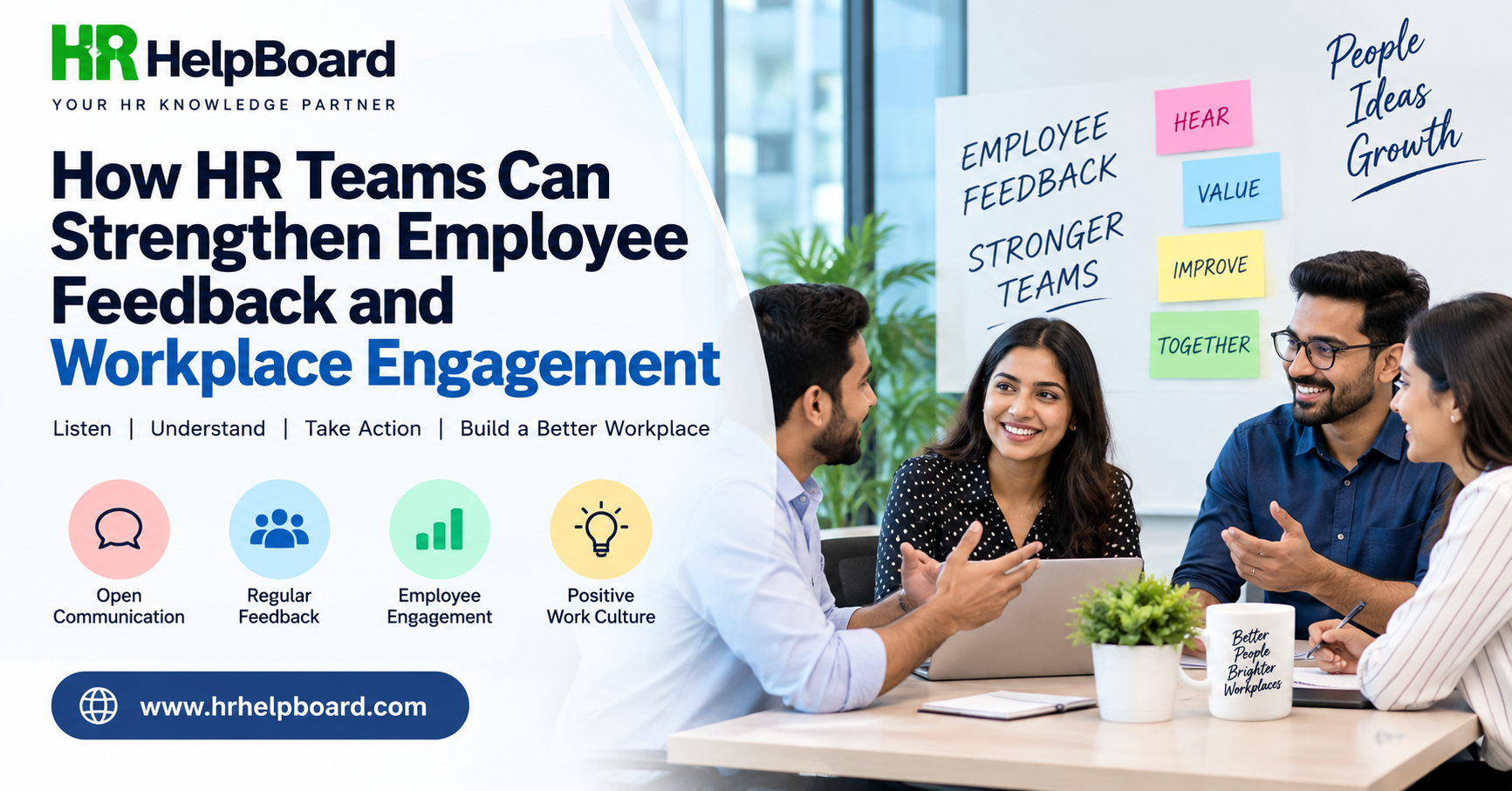
How HR Teams Can Strengthen Employee Feedback and Workplace Engagement
How HR Teams Can Strengthen Employee Feedback and Workplace Engagement
Employee feedback is an important part of creating a healthy and productive workplace. Employees want to know that their opinions are heard, while organizations need honest information to understand what is working and where improvements may be required.
For HR teams, building a strong feedback culture is about more than conducting an annual employee survey. It involves creating regular opportunities for employees to communicate, encouraging managers to listen, and making sure feedback leads to meaningful conversations and appropriate action.
Make Employee Feedback a Regular Activity
Feedback becomes more useful when it is collected regularly rather than only once a year.
HR teams can introduce short employee surveys, regular check-ins, team discussions, pulse surveys, and one-to-one conversations. These activities can help organizations identify concerns before they become larger workplace issues.
Regular feedback also gives employees an opportunity to share their experiences while those experiences are still recent.
The process does not always have to be complicated. Even a short monthly check-in can provide useful information when the questions are relevant and the results are reviewed properly.
Give Employees Different Ways to Share Feedback
Employees have different communication preferences. Some may be comfortable speaking directly with a manager, while others may prefer written or anonymous feedback.
HR teams can provide several options, including:
- Employee engagement surveys
- Anonymous feedback forms
- One-to-one meetings
- Team meetings
- Suggestion channels
- Pulse surveys
- HR discussions
Providing different channels can make it easier for employees to communicate openly.
At the same time, organizations should avoid creating too many communication channels. Employees should clearly understand where they can provide feedback and which channel should be used for different types of concerns.
Encourage Managers to Listen
Managers have a direct influence on the employee experience. Employees often discuss workplace concerns with their immediate managers before approaching HR.
HR teams can therefore help managers develop better listening skills.
Effective listening involves giving employees enough time to explain their concerns, asking relevant questions, avoiding unnecessary interruptions, and making sure the employee understands the next steps.
Managers do not always need to provide an immediate solution. Sometimes employees primarily need an opportunity to explain what they are experiencing.
Ask Specific Questions
The quality of feedback depends partly on the questions being asked.
A broad question such as “Are you happy at work?” may not provide enough information for HR to identify a specific issue.
Instead, HR teams can ask focused questions about areas such as:
- Communication with managers
- Workload
- Recognition
- Career development
- Learning opportunities
- Team collaboration
- Workplace flexibility
- Leadership communication
Specific questions can produce more useful information and make it easier to identify patterns.
Create a Safe Environment for Feedback
Employees are more likely to provide honest feedback when they believe they can speak without unnecessary negative consequences.
HR teams should explain how employee feedback will be collected, who may have access to it, and how the information will be used.
For sensitive subjects, anonymous feedback can provide an additional option.
However, confidentiality should be supported by responsible processes. If employees repeatedly share concerns and see no response, they may become less willing to participate in future feedback initiatives.
Close the Feedback Loop
One of the most important parts of an employee feedback process is follow-up.
Employees do not expect every suggestion to be implemented. However, they should know that their feedback has been reviewed.
HR teams can share general findings with employees and explain what actions are being considered.
For example, if employees indicate that internal communication needs improvement, HR could introduce clearer communication procedures, manager communication guidelines, or a centralized HR information resource.
When employees can see a connection between feedback and action, the feedback process becomes more meaningful.
Recognize Employee Contributions
Feedback should not focus only on problems.
HR teams can also encourage positive feedback and recognition. Employees should receive acknowledgement when they contribute to projects, support colleagues, demonstrate new skills, or help improve workplace processes.
Recognition can come from managers, colleagues, HR teams, or formal employee recognition programs.
Specific recognition is often more meaningful than a generic compliment because it explains what the employee did well and why it was valuable.
Use HR Technology Wisely
Technology can help HR teams collect and organize employee feedback.
Digital surveys, HR platforms, employee engagement tools, and feedback systems can make it easier to gather information from larger groups of employees.
However, technology should support human communication rather than completely replace it.
For example, a survey might show that employees are concerned about workload, but a follow-up conversation may be necessary to understand the reasons behind those concerns.
HR teams should therefore combine digital tools with personal conversations.
Turn Feedback Into Workplace Improvements
Employee feedback can provide useful ideas for improving workplace practices.
HR teams can review feedback for recurring themes and discuss appropriate actions with managers and business leaders.
Depending on the findings, organizations may consider improvements in areas such as training, communication, recognition, career development, onboarding, employee wellbeing, or management practices.
Not every issue can be resolved immediately, but establishing priorities can help HR teams focus their efforts where they can have the greatest practical impact.
Measure the Feedback Process
HR teams should also evaluate whether their feedback initiatives are effective.
Useful indicators can include participation rates, survey responses, recurring concerns, employee engagement trends, and the number of actions taken following feedback.
The objective should not simply be to collect more data. The objective is to gather useful information and use it to improve the employee experience.
HR teams can also periodically ask employees whether they understand the feedback process and feel comfortable using it.
Conclusion
A strong employee feedback culture develops through regular communication, active listening, trust, and appropriate action.
HR teams can strengthen feedback practices by providing multiple communication channels, helping managers become better listeners, asking focused questions, protecting confidentiality, recognizing employee contributions, and using technology appropriately.
Most importantly, feedback should be treated as an ongoing conversation rather than an annual HR activity. When employees know that their opinions are heard and thoughtfully considered, feedback can become a valuable tool for improving communication, engagement, and the overall workplace experience.
React to this post
Related Articles



.png)