

Related Articles








NPL Match Delay Raises Questions Over Match Management and Ground Safety
The Nepal Premier League (NPL) has come under scrutiny following Saturday's rain-affected matches, with concerns emerging over ground conditions, repeated toss delays and the decision to proceed with a shortened game.
The opening match between Chitwan Rhinos and Lumbini Lions was abandoned because of a wet playing surface. Later, the second fixture between Biratnagar Kings and Sudurpaschim Royals also faced significant delays as officials repeatedly revised the toss and match schedules.
Initially, the toss was scheduled for 5 PM. Following the rain interruption, it was moved to 7:25 PM. However, the ground conditions continued to raise concerns, preventing the match from starting as planned.
Eventually, the game was reduced to five overs per side, but even that shortened contest began much later than initially announced.
Repeated Toss Delays Raise Questions
The most significant concern surrounding the match was the repeated postponement of the toss.
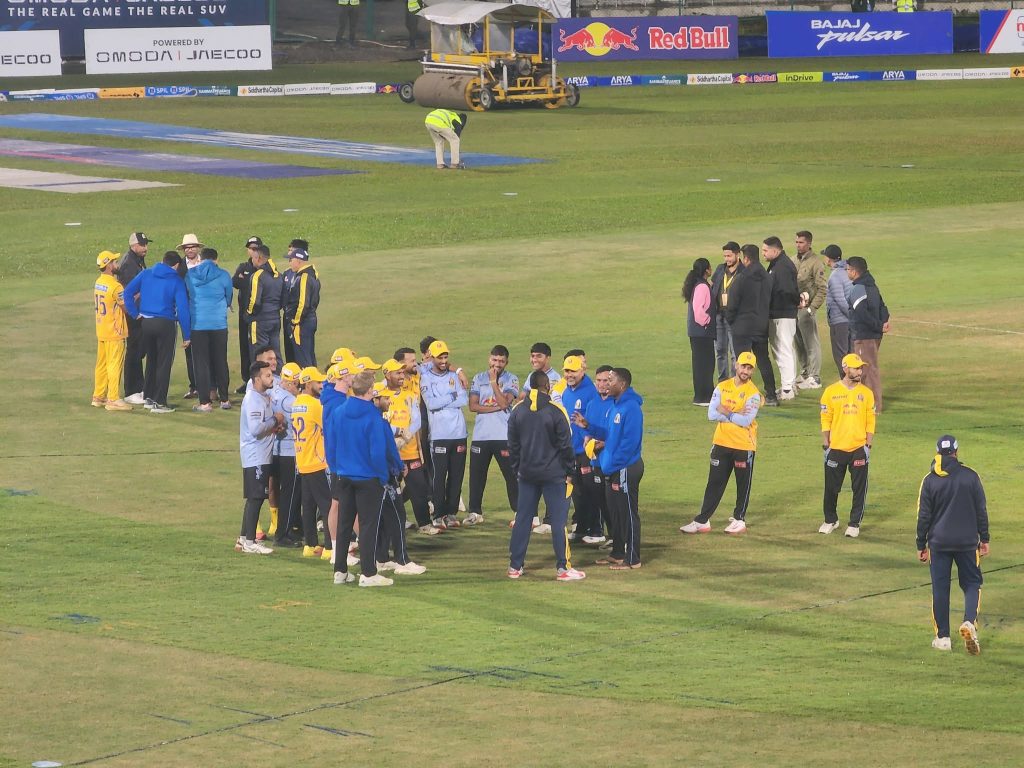
After officials announced that the toss would take place at 7:25 PM, the schedule was revised again. Biratnagar Kings captain Sandeep Lamichhane arrived on the field, while Sudurpaschim Royals captain Dipendra Singh Airee was initially absent.
The situation led to discussions involving Sudurpaschim head coach Misbah-ul-Haq, team manager Sunil Thapa, captain Dipendra Singh Airee, Cricket Association of Nepal (CAN) Secretary Paras Khadka and match referee Wendell Labuschagne.
Sudurpaschim reportedly raised concerns about the wet outfield and the potential risks to players.
At 8:54 PM, the team communicated its readiness to play. Subsequently, officials scheduled the toss for 9 PM and the first delivery for 9:15 PM.
The toss eventually took place at 9:05 PM, with the match starting at 9:15 PM.
What Do ICC Playing Conditions Say About Toss Delays?
ICC Men's T20 International Playing Conditions provide guidelines regarding toss procedures and match scheduling.
Under Clause 13.4, the toss must generally take place between 15 and 30 minutes before the scheduled or rescheduled start of a match.
This provision allows match officials to revise the schedule when circumstances such as rain or unsuitable ground conditions affect the original timetable.
Therefore, changing the toss time is not necessarily a violation of cricket regulations. However, postponing an inspection, changing the toss schedule and extending the final permitted match-start deadline are separate matters.
The tournament's own playing conditions are equally important when determining how long a match can be delayed and whether a shortened contest can still be conducted.
Why Was the Match Started After the Announced Deadline?
One of the biggest questions concerns the official starting deadline for the five-over match.
According to the published schedule, 7:41 PM was indicated as the latest time for the first delivery of the shortened contest. This deadline was intended to ensure that both teams could complete at least five overs.
However, the match eventually started at 9:15 PM, approximately 94 minutes after the initially announced deadline.
This has raised questions about whether the tournament management had the authority to extend the deadline and under which specific regulations the decision was made.
If 7:41 PM was the final permitted starting time under the applicable NPL playing conditions, the decision to begin the match later requires an official explanation.
On the other hand, if match officials established a revised deadline after ground inspections and consultations with both teams, the relevant tournament provisions should be made public.
Player Safety Remains a Major Concern
Beyond scheduling issues, the condition of the playing surface is another important aspect of the controversy.
Cricket regulations place significant responsibility on umpires to assess whether the ground, weather and lighting conditions are suitable for play.
Under Clauses 2.7 and 2.8 of the ICC Men's T20 International Playing Conditions, umpires are responsible for determining whether conditions are safe and fair for both teams.
A wet outfield can create several risks, including:
-
Bowlers losing their footing during delivery.
-
Fielders slipping while chasing or stopping the ball.
-
Batters struggling to run safely between the wickets.
-
Increased chances of injuries due to slippery playing conditions.
If the ground is considered dangerous or unsuitable, umpires have the authority to delay the start or suspend an ongoing match.
Ultimately, player safety must take priority over completing a scheduled fixture.
NPL Management Needs to Clarify Its Playing Conditions
The incident has highlighted the importance of transparency in tournament management.
Although ICC playing conditions provide general guidelines, international T20 regulations do not automatically apply in their entirety to every domestic tournament. The official playing conditions and regulations adopted for the third edition of the NPL must therefore be examined before reaching a final conclusion.
The tournament management should clarify:
-
Whether the 7:41 PM deadline was final or subject to revision.
-
Which regulation allowed the match to begin at 9:15 PM.
-
Whether both teams agreed to the revised schedule.
-
What ground-safety assessments were conducted before allowing the match to proceed.
The decision to delay a match does not automatically mean that officials have violated cricket regulations. However, when a match begins significantly later than its publicly announced deadline, transparency becomes essential.
The NPL is an important competition for Nepali cricket, and maintaining confidence in its organization requires clear communication, consistent regulations and, above all, the safety of players.
React to this post
Related Articles