
Related Articles









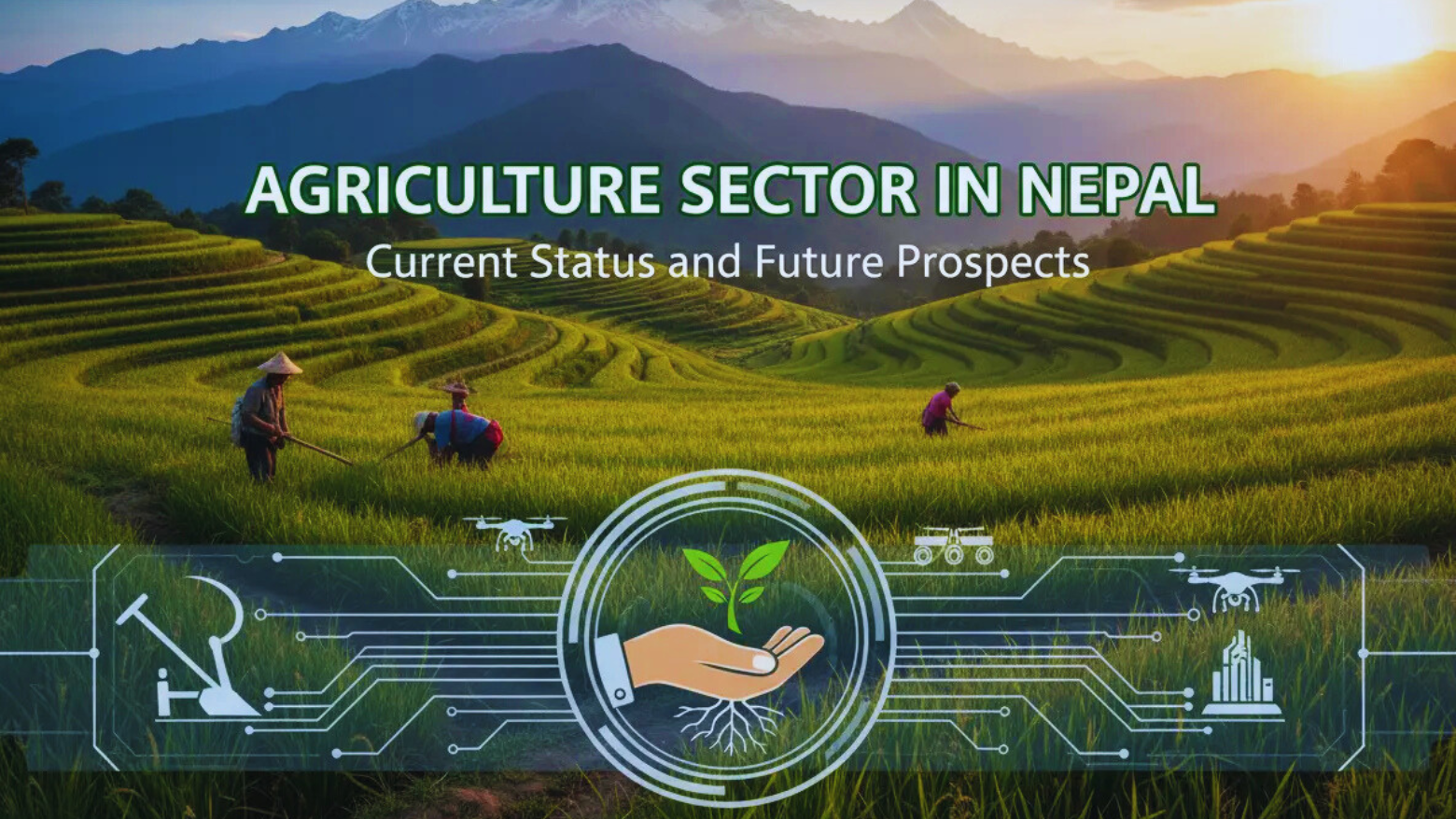
Agriculture Sector in Nepal: Current Status and Future Prospects | Nepinsights
Agriculture in Nepal: Status, Challenges, and Future Prospects
Agriculture is one of the most important sectors of Nepal’s economy and society. It provides food, employment, and income to a large part of the population, especially in rural areas. Even though the contribution of agriculture to the national economy has gradually declined due to the growth of service and industrial sectors, it still plays a vital role in Nepal’s overall development.
This Nepinsight's article explains the current status of agriculture in Nepal, the major challenges faced by the sector, and the future opportunities and prospects for sustainable agricultural growth.
Current Status of Agriculture in Nepal
Contribution to National Economy
Agriculture contributes around one-fourth of Nepal’s Gross Domestic Product (GDP). Although this share was much higher in the past, agriculture remains a key driver of economic stability. The performance of the agriculture sector directly affects national income, food prices, and rural livelihoods.
Employment and Livelihood
Agriculture is the largest source of employment in Nepal, engaging around 60% of the total workforce. Most rural households depend on farming, livestock rearing, and related activities for their daily survival. Even for families receiving remittance income, agriculture often remains an important secondary source of food and income.
Major Crops and Agricultural Products
Nepal’s agriculture is dominated by cereal crops and livestock farming.
- Rice is the main crop and staple food of Nepal.
- Other major crops include maize, wheat, millet, barley, and pulses.
- The country also produces a wide range of vegetables, fruits, spices, tea, coffee, and medicinal herbs.
- Livestock farming, including cattle, buffalo, goats, poultry, and dairy production, contributes significantly to agricultural income.
Due to Nepal’s diverse climate and geography, agriculture varies across the Terai, hills, and mountain regions, allowing the cultivation of different crops throughout the year.
Challenges Faced by Agriculture Sector in Nepal
Despite its importance, the agriculture sector faces many structural and practical challenges.
1. Dependence on Traditional Farming Methods
A large number of farmers still use traditional tools and techniques. Limited access to modern machinery, improved seeds, fertilizers, and scientific farming practices keeps productivity low compared to regional standards.
2. Irrigation Problems
Only a portion of Nepal’s farmland has access to reliable irrigation facilities. Most farmers depend on monsoon rainfall, making agriculture vulnerable to droughts, delayed rains, and uneven water distribution. Poor maintenance of irrigation canals further worsens the problem.
3. Limited Access to Finance
Small farmers often struggle to obtain agricultural loans due to lack of collateral, high interest rates, and complicated banking procedures. This limits their ability to invest in better inputs, technology, and farm expansion.
4. Market Access and Infrastructure Issues
Weak rural roads, poor transportation systems, lack of storage facilities, and absence of cold chains result in high post-harvest losses. Farmers are often forced to sell products at low prices to middlemen, reducing their profit margins.
5. Climate Change and Natural Disasters
Climate change has increased the frequency of floods, landslides, droughts, and unpredictable weather patterns. These changes negatively affect crop yields, livestock health, and overall food security, especially for small and marginal farmers.
6. Low Budget Allocation and Policy Implementation Gaps
Although agriculture employs a majority of the population, it receives a relatively small share of the national budget. In addition, policy implementation at the local level is often slow and uneven.
Government Policies and Initiatives for Agriculture
Agricultural Development Strategy (ADS)
The Agricultural Development Strategy is a long-term plan aimed at transforming subsistence farming into a commercial, competitive, and sustainable agriculture system. It focuses on productivity growth, food security, commercialization, and environmental sustainability.
Subsidies and Farmer Support Programs
The government provides subsidies on fertilizers, seeds, irrigation equipment, and agricultural machinery. Training programs and extension services are also offered to help farmers adopt improved farming techniques.
Agricultural Research and Extension Services
Research institutions work on developing improved crop varieties, pest-resistant seeds, and climate-resilient farming methods. Extension services help transfer this knowledge to farmers through training, demonstrations, and advisory support.
Future Prospects of Agriculture in Nepal
Despite existing challenges, agriculture in Nepal has strong potential for growth and transformation.
Modernization and Mechanization
Introducing modern tools, machinery, improved seeds, and efficient irrigation systems can significantly increase productivity and reduce labor dependency. Mechanization is especially important as youth migration has reduced the rural workforce.
Sustainable and Organic Agriculture
Sustainable farming practices such as organic farming, soil conservation, water management, and integrated pest management can protect natural resources while maintaining long-term productivity. Nepal has strong potential in organic and eco-friendly agriculture.
Development of Agricultural Value Chains
Investment in roads, storage facilities, food processing industries, and cold storage systems can reduce waste and increase farmers’ incomes. Strong value chains also improve access to domestic and international markets.
Crop Diversification and High-Value Agriculture
Shifting from low-value cereal crops to high-value fruits, vegetables, spices, herbs, tea, and coffee can improve farm income. Diversification also reduces risk from crop failure and price fluctuations.
Use of Technology and Digital Agriculture
Digital platforms can help farmers access market prices, weather forecasts, agricultural advice, and financial services. Precision farming and smart agriculture technologies can improve efficiency and decision-making. Wanna learn about tech in Nepal? Click Here!
Climate-Smart Agriculture
Climate-resilient crops, agroforestry, water-efficient irrigation, and disaster-risk management practices are essential to adapt to changing climate conditions and protect food security.
Role of Youth in Nepalese Agriculture
Importance of Youth Participation
Youth involvement is critical for the future of agriculture in Nepal. Young farmers bring innovation, entrepreneurship, and technological knowledge that can modernize the sector.
Education and Skill Development
Training programs in modern farming, agribusiness management, and agricultural technology can prepare youth for profitable careers in agriculture.
Access to Land, Credit, and Markets
Providing youth with access to land, affordable credit, and markets can encourage them to start agricultural enterprises and reduce unemployment and migration.
Conclusion
Agriculture remains a backbone of Nepal’s economy and rural society. While the sector faces challenges such as traditional farming practices, climate change, irrigation shortages, and weak market systems, it also offers vast opportunities for growth. By adopting modern technologies, promoting sustainable practices, strengthening infrastructure, and engaging youth, Nepal can transform its agriculture sector into a more productive, resilient, and income-generating engine for national development.
FAQs About Agriculture in Nepal
Q: What is the main crop grown in Nepal?
Rice is the main crop and staple food of Nepal.
Q: How important is agriculture to Nepal’s economy?
Agriculture contributes around one-fourth of the national GDP and employs about 60% of the population.
Q: What are the major problems in Nepalese agriculture?
Key problems include lack of modern technology, irrigation issues, climate change, poor market access, and limited financing.
Q: How can agriculture in Nepal be improved?
Through modernization, irrigation development, value chain investment, sustainable practices, and youth engagement.
Q: Why is agriculture important for rural Nepal?
It provides food security, employment, and income, forming the backbone of rural livelihoods.
React to this post
Related Articles