Related Articles







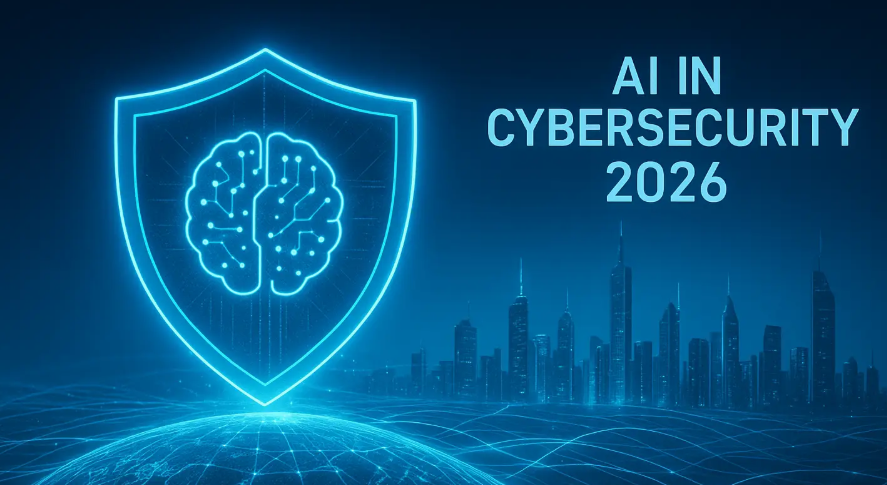
Afroz Fatta on the Future of AI and Cybersecurity in 2026
Artificial intelligence is becoming an important part of the cybersecurity world. As businesses move more of their work online, the number of digital threats is also increasing. Cybercriminals are finding new ways to target companies, steal information and trick people.
In this changing environment, Afroz Fatta's perspective is that artificial intelligence can become an important tool for improving cybersecurity. At the same time, he highlights that AI also creates new risks that businesses cannot ignore.
The key idea is simple: AI can help protect digital systems, but it must be used carefully and responsibly.
AI Is Changing Cybersecurity
According to the perspective presented in Afroz Fatta's discussions, cybersecurity is moving beyond traditional methods.
Older security systems often depended on known threats, fixed rules and manual investigation. These methods are still useful, but modern businesses generate huge amounts of digital information every day.
AI can help security teams examine this information much faster.
It can identify unusual activity, find patterns and help security professionals decide which alerts need immediate attention.
This can make cybersecurity more proactive instead of waiting for an attack to cause serious damage.
His broader discussion of artificial intelligence and cybersecurity focuses on this shift toward smarter and faster protection.
Afroz Fatta’s Perspective on AI-Powered Threat Detection
One of the biggest benefits of AI in cybersecurity is its ability to identify unusual behavior.
For example, an employee's account may suddenly attempt to access information it normally does not use. A device could begin communicating with an unfamiliar system. A large amount of data might suddenly be transferred from a company network.
Any one of these events may not automatically mean an attack has happened.
However, when several unusual activities happen together, AI systems can help security teams recognize that something may be wrong.
From Afroz Fatta's perspective, this ability to identify problems earlier is one of the reasons AI could become increasingly important to cybersecurity.
AI Should Support People, Not Replace Them
Another important part of this perspective is the role of people.
AI can process information quickly, but cybersecurity is not only about processing information. Security professionals still need to understand business situations, investigate incidents and make important decisions.
For example, an unusual login could be a cyberattack, but it could also be a legitimate employee working from a different location.
An AI system can identify the unusual activity. A human professional can then examine the circumstances and decide what action should be taken.
This combination of AI technology and human judgment can provide a stronger security approach.
The goal should not simply be to replace cybersecurity teams with machines. Instead, AI can help professionals spend more time on serious threats and less time reviewing routine alerts.
Afroz Fatta on the Growing Deepfake Threat
Afroz Fatta's cybersecurity discussions also draw attention to one of the more difficult problems created by artificial intelligence: deepfakes.
AI can now be used to create realistic-looking images, videos and cloned voices. This creates new opportunities for criminals who want to impersonate another person.
For businesses, this can become a serious security issue.
Imagine receiving a voice message that appears to come from a company executive asking for an urgent payment. Or imagine receiving a video call where the person appears to be someone you know.
The technology may make the communication look genuine even when it is not.
Afroz Fatta's discussion of AI-driven deepfakes focuses on this growing challenge and the need for stronger awareness around digital identity.
Businesses Need Better Digital Verification
The rise of deepfakes means businesses may need to rethink how they confirm important requests.
A familiar voice or video should not always be treated as proof of identity.
For sensitive activities, businesses can use additional verification methods.
These may include:
• Confirming requests through a separate communication channel
• Using multi-factor authentication
• Limiting access to sensitive systems
• Training employees to recognize impersonation
• Requiring additional approval for financial transactions
The basic lesson is that digital identity should be verified rather than simply trusted.
This becomes increasingly important as AI-generated content becomes more realistic.
AI Can Also Be Used by Cybercriminals
Afroz Fatta's perspective recognizes that AI is not automatically a defensive technology.
The same technology that helps cybersecurity teams can also be used by attackers.
Criminals may use AI to create more convincing phishing messages, automate parts of their activities or make social-engineering attacks more personalized.
This creates a difficult situation for businesses.
AI can make security stronger, but it can also make attacks more sophisticated.
This is why businesses need to think about both sides of AI.
Afroz Fatta’s View on the Future of Cybersecurity
Modern companies handle large amounts of valuable information.
Customer information, financial records, employee data and business documents are increasingly stored and processed digitally.
Afroz Fatta's broader perspective suggests that businesses cannot rely only on traditional security practices as this environment becomes more complex.
AI-powered cybersecurity can help organizations monitor activity and respond to potential threats more efficiently.
However, introducing AI should not mean ignoring basic cybersecurity.
Strong passwords, access controls, software updates, backups, employee training and multi-factor authentication remain important.
AI should add another layer of protection rather than replace established security practices.
AI Security Is Also Becoming Important
There is another side to the discussion.
Businesses are not only using AI to protect their systems. They also need to protect the AI systems they use.
AI systems can face risks involving data security, unauthorized access, malicious inputs, supply-chain weaknesses, vulnerabilities and unexpected behavior.
AI agents create additional concerns because they can receive access to data, applications and tools.
For Afroz Fatta's overall perspective, this reinforces an important point: businesses should look at AI as part of their complete security strategy, not as a standalone solution.
The Future of AI and Cybersecurity
The role of artificial intelligence in cybersecurity is likely to continue growing.
AI may increasingly help organizations:
• Detect suspicious behavior
• Analyze security alerts
• Identify potential threats
• Support incident investigations
• Monitor digital activity
• Improve response times
• Identify emerging risks
But technology alone cannot solve every cybersecurity problem.
Businesses also need trained professionals, clear security policies and responsible use of AI.
The future will therefore depend on a balance between technology and human judgment.
Afroz Fatta's Main View on AI in Cybersecurity
The central message from Afroz Fatta's published perspective can be understood in a straightforward way: AI has the potential to make cybersecurity faster, smarter and more proactive, but organizations must also prepare for the risks that AI creates.
AI can help security professionals find threats earlier.
It can help businesses handle large amounts of security information.
It can also create new challenges through deepfakes, automated attacks and digital impersonation.
For this reason, businesses should not treat artificial intelligence as a magic solution.
Instead, AI should work alongside cybersecurity professionals, strong security controls and employee awareness.
Conclusion
Artificial intelligence is changing cybersecurity in 2026, and its influence is likely to become even greater.
Afroz Fatta's perspective highlights both sides of this development. AI can provide businesses with better tools for identifying threats and protecting digital systems, but the same technology can also be used to create more convincing cyberattacks.
The most important lesson is therefore about balance.
Businesses need to take advantage of AI while also understanding its limitations and risks. Human oversight, digital identity protection, employee awareness and strong cybersecurity practices will remain essential.
As AI becomes more deeply connected to everyday business operations, cybersecurity will no longer be only about protecting computers and networks. It will also be about protecting trust, identity, information and the systems that make intelligent decisions.
React to this post
Related Articles