

Related Articles









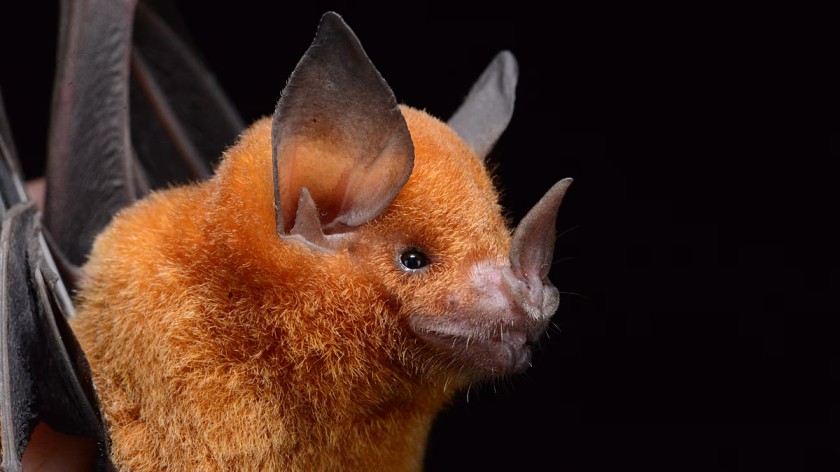
New Research Suggests Bats May Have Originated in Europe 65 Million Years Ago
A major international study combining bat genomes and fossil evidence has offered new insights into the evolutionary history of bats, suggesting that the world's only truly flying mammals may have originated in Europe around 65 million years ago.
The research, led by scientists associated with the University of St Andrews and the international Bat1K consortium, represents the largest combined analysis of bat genomes and fossils conducted to date. The findings challenge earlier theories that bats originated in regions such as Asia, Africa or North America.
Published in Nature, the study involved 137 researchers from 64 countries who worked together to reconstruct the evolutionary history of bats and investigate when some of their most distinctive characteristics first appeared.
Genomic and Fossil Evidence Point to Europe
Researchers assembled a high-quality genomic dataset covering all 21 currently recognized bat families and 103 species. The genomes were produced using advanced DNA sequencing and computational techniques, allowing scientists to compare genetic differences and relationships across a broad range of bat species.
The team then combined this genomic information with evidence from 44 bat fossils collected from different parts of the world.
By analyzing living species and fossils together, researchers were able to build a more detailed evolutionary tree and investigate the geographical origins of bats.
The results indicate that bats may have first emerged in Europe approximately 65 million years ago. Early bat lineages are thought to have subsequently expanded into Africa, creating an important Europe-Africa evolutionary center before spreading farther into Asia, the Americas and Australia.
The findings therefore challenge several earlier hypotheses about the geographical origin of bats.
One of the Largest Bat Genome Collections
The Bat1K consortium has spent years collecting genetic material from bats across the globe, including rare species found in some of the world's most remote regions.
The resulting dataset is considered the largest high-quality collection of bat genomes assembled so far. It provides researchers with an unprecedented opportunity to compare the genetic makeup of different bat groups and investigate how their unusual biological characteristics developed.
Sonja Vernes, a senior author of the study and director of Bat1K, described bats as an exceptional example of evolutionary experimentation.
According to Vernes, the genomic resource created through years of international collaboration is helping scientists better understand how the remarkable characteristics of bats emerged and developed.
Flight and Echolocation May Have Evolved Together
One of the most significant findings concerns two characteristics that define bats: powered flight and echolocation.
Bats are unique among mammals because they are capable of true sustained flight. Many species also use echolocation, producing sounds and interpreting returning echoes to navigate and locate prey, even in extremely dark environments.
The fossil record offers important clues about when this sophisticated ability appeared.
Researchers included the fossil bat Vielasia among the earliest branches of the bat evolutionary tree. Its position suggests that echolocation may already have been present before modern bat groups began diversifying.
This supports the possibility that flight and echolocation were already established near the beginning of bat evolution rather than emerging much later.
The finding could help explain how bats became such a successful mammalian lineage and survived through roughly 65 million years of evolutionary change.
Reconstructing the Genome of an Ancient Bat
The researchers also reconstructed aspects of the genome of the ancestral bat, providing scientists with a picture of what the genetic makeup of one of the earliest flying mammals may have looked like.
This reconstructed evolutionary framework could help researchers investigate how mammals developed sophisticated flight, biosonar and other unusual biological adaptations.
It also provides a starting point for examining the genes associated with characteristics that make bats particularly unusual among mammals.
Why Bat Evolution Matters to Human Health
Bats are not only biologically unusual; they also possess several traits that have attracted considerable scientific interest.
Some bat species can live for remarkably long periods relative to their body size, while others show unusual resistance to diseases and infections.
The new genomic dataset could allow scientists to investigate the evolutionary origins of these traits at a much deeper level.
Researchers hope that understanding the genetic mechanisms behind bats' longevity, immune responses and disease resistance could eventually contribute to studies of human aging, infectious diseases and the immune system.
However, the study primarily provides an evolutionary and genomic framework for future research rather than demonstrating direct medical applications.
Bats Play a Major Role in Ecosystems
There are more than 1,500 known bat species worldwide, making bats one of the most diverse groups of mammals. They account for roughly one-fifth of living mammal species.
Their ecological importance is equally significant.
Depending on the species, bats help pollinate plants, disperse seeds and control insect populations by consuming large numbers of insects. Their activities contribute to the health and stability of many ecosystems.
Despite their importance, fundamental questions about bat evolution have remained difficult to answer, including where bats originated, how their major groups are related and when flight and echolocation first developed.
The new study provides a more comprehensive framework for addressing many of these questions.
A New Chapter in the Study of Bat Evolution
Liliana M. Dávalos, a senior author from Stony Brook University, highlighted the importance of combining fossil and genomic information.
The researchers' approach allows evolutionary models to incorporate evidence from both living and extinct species, helping scientists identify ancient bat lineages and estimate when and where important evolutionary events occurred.
By bringing together genetic data from more than 100 species with fossil evidence, the Bat1K project has significantly expanded the scientific resources available for studying bat evolution.
The new research suggests that bats may trace their evolutionary origins to Europe approximately 65 million years ago, before spreading across Africa and eventually reaching other parts of the world.
More importantly, the study indicates that flight and echolocation may have been established very early in bat evolution. The reconstructed genomic information also offers scientists a powerful resource for investigating the biological mechanisms behind bats' longevity, disease resistance, immune responses and other extraordinary traits.
As researchers continue analyzing the Bat1K genomic dataset, it could provide new insights not only into the evolutionary history of bats but also into biological processes with potential relevance to human health.
React to this post
Related Articles