
Related Articles


Chhath Festival Celebrated with Devotion and Enthusiasm in Nepal and India
The Chhath Festival, one of the most significant Hindu festivals dedicated to the worship of the Sun God and Chhathi Maiya, is being celebrated with great devotion and enthusiasm across Nepal and India. The festival holds particular importance in Nepal's Madhesh and Terai regions, where devotees gather along rivers, ponds and other water bodies to perform traditional rituals and offer prayers to the setting and rising sun.
Celebrated over four days after the Tihar festival, Chhath is a symbol of faith, purity, discipline, gratitude and respect for nature. Although it has traditionally been observed with great devotion in the Madhesh region, the festival has gradually gained popularity across Nepal, including the country's hilly and Himalayan regions.
The festival is dedicated to expressing gratitude to the Sun God, who is considered the source of life, energy and prosperity. Devotees observe rigorous fasting, prepare traditional offerings and pray for the happiness, good health, long life and well-being of their families.
One of the most distinctive aspects of Chhath is that prayers are offered to both the setting and the rising sun, making it a unique celebration of nature and spiritual devotion.
Four-Day Rituals of the Chhath Festival
Chhath is observed over four consecutive days, with each day carrying its own religious significance and traditional practices.
1. Nahay-Khay: Beginning the Festival with Purity

The first day of Chhath falls on Kartik Shukla Chaturthi and is known as Nahay-Khay.
On this day, devotees wake up early, take a holy bath and clean their homes and surroundings. Personal and household cleanliness is considered particularly important because the festival emphasises purity and discipline.
Devotees prepare and consume simple, sattvic food, traditionally including rice, lentils and bottle gourd curry. The food is prepared with great care, following traditional practices that emphasise cleanliness and purity.
Nahay-Khay marks the beginning of the four-day festival and prepares devotees for the rigorous fasting and worship that follow.
2. Kharna: A Day of Fasting and Devotion

The second day, Kartik Shukla Panchami, is known as Kharna.
On this day, devotees observe a day-long fast and consume food only after completing their evening worship. Traditionally, they take a bath before preparing special prasad, including Rasiyaw, a traditional kheer made from rice, milk and jaggery.
The prasad is prepared with great devotion and offered before being distributed among family members and other devotees.
Following the Kharna rituals, devotees begin the main Chhath fast, which is traditionally observed without food and water until the completion of the final morning offerings.
3. Sandhya Arghya: Offering Prayers to the Setting Sun

The third day, Kartik Shukla Shashthi, is considered the main day of Chhath Puja.
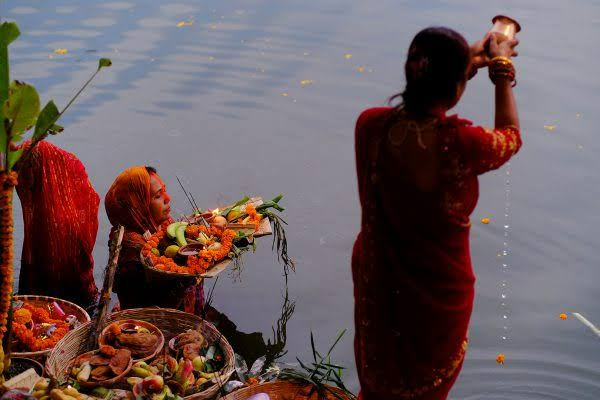
On this occasion, devotees gather at rivers, ponds, lakes and other water bodies to offer Sandhya Arghya to the setting sun.
They carry traditional bamboo baskets and winnowing trays filled with fruits, sugarcane, coconuts, thekuwa and other offerings. Standing in water, devotees offer prayers to the Sun God as the sun gradually sets on the horizon.
The atmosphere becomes deeply spiritual, with devotional songs, traditional music and religious prayers filling the surroundings.
After completing the evening rituals, devotees often remain awake throughout the night near the riverbanks or water bodies, continuing their prayers and devotional activities.
4. Usha Arghya: Welcoming the Rising Sun

The fourth and final day, Kartik Shukla Saptami, marks the conclusion of the Chhath Festival.
Devotees gather early in the morning at designated water bodies to offer Usha Arghya to the rising sun.
After observing the rigorous fast throughout the festival, devotees offer prayers to the first rays of the morning sun, seeking blessings for good health, happiness, prosperity and the well-being of their families.
Once the morning worship is completed, devotees conclude their fast by consuming prasad, a ritual traditionally known as Paran.
The prasad is then distributed among relatives, neighbours and other devotees, bringing the four-day festival to a joyful conclusion.
Traditional Foods and Offerings Used During Chhath Puja
Some of the commonly used items include:
-
Thekuwa: A traditional sweet prepared using wheat flour, jaggery and ghee.
-
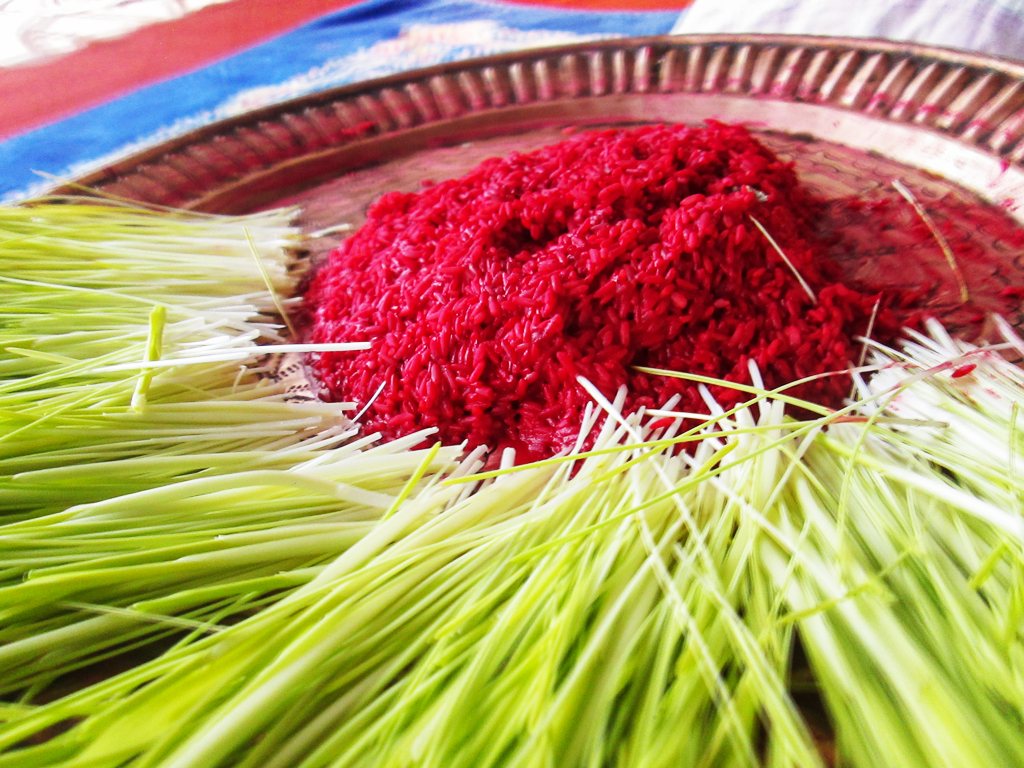
Bhusuwa: A traditional rice-based delicacy prepared as part of the festival offerings.
-
Sugarcane: An important offering symbolising prosperity and abundance.
-
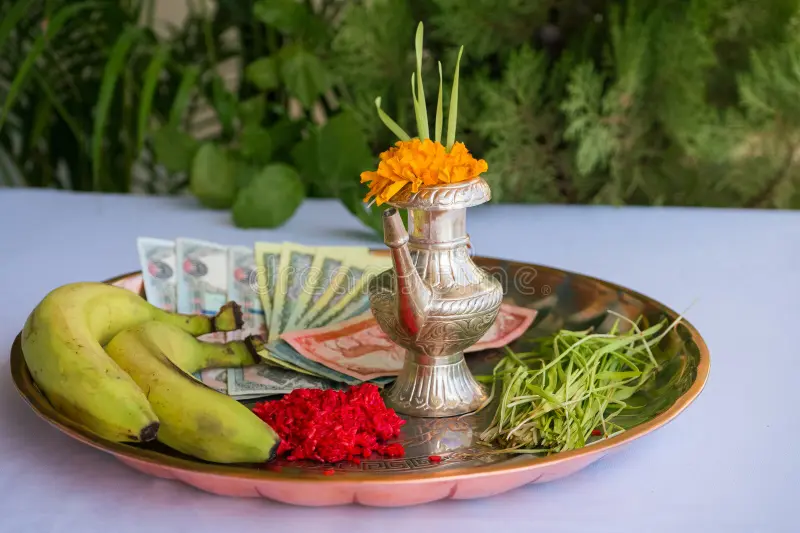
Bananas: Fruits commonly included in traditional Chhath baskets.
-
Coconut: Offered as a symbol of purity and devotion.
-
Turmeric and ginger: Traditional natural offerings used during the rituals.
-
Rice and other seasonal fruits: Included in the offerings presented to the Sun God.
These items are traditionally arranged in bamboo baskets and carried to the riverbanks or designated worship locations.
The preparation of prasad is generally carried out with particular attention to cleanliness, purity and traditional customs.
Religious and Mythological Significance of Chhath Festival
Chhath Festival is associated with several religious and mythological stories from Hindu tradition. These stories explain the importance of Sun worship and the spiritual significance of observing the festival.
One popular belief connects Chhath with Lord Rama and Goddess Sita. According to traditional accounts, after returning to Ayodhya following their victory over Ravana, Rama and Sita performed Sun worship during Kartik Shukla Shashthi and offered Arghya to the rising sun the following morning.
Another traditional belief relates to Sati Anusuya, the wife of Sage Atri, who is associated with observing a sacred fast for marital happiness and well-being.
The festival is also connected with the Mahabharata. According to popular traditions, Draupadi worshipped the Sun God during the Pandavas' exile, seeking blessings and support during their difficult period.
Similarly, Karna, the son of the Sun God, is remembered for his devotion to Surya. According to the epic tradition, he regularly worshipped the Sun while standing in water, receiving blessings that contributed to his strength and abilities as a warrior.
These stories have contributed to the religious and cultural importance of Chhath, which continues to be observed by millions of devotees.
Why Is the Sun Worshipped During Chhath?
The Sun is considered one of the most important natural sources of energy and life on Earth.
In Hindu tradition, Surya Dev is worshipped as the source of light, strength, health and vitality. The Sun provides energy for plants, supports agricultural production and plays an essential role in maintaining life on the planet.
Chhath is therefore also an expression of gratitude towards nature and the natural forces that sustain human existence.
The festival encourages people to recognise the importance of environmental balance, clean water, sunlight and the natural resources that support everyday life.
Morning sunlight is also an important natural source of vitamin D, which supports bone health and normal body functions. However, claims that Chhath rituals themselves cure diseases should not be treated as scientifically established medical facts.
Through its traditions, Chhath highlights the connection between human life, nature and spiritual well-being.
Chhath Festival: A Symbol of Faith, Family and Community Unity
Beyond its religious significance, Chhath has an important social and cultural role in Nepali society.
The festival brings families, neighbours and entire communities together. People participate in cleaning riverbanks, preparing worship areas, arranging traditional offerings and supporting devotees observing the rigorous fast.
In many parts of the Madhesh region, local communities organise special arrangements near rivers, ponds and reservoirs to facilitate worship.
The festival also promotes messages of discipline, cleanliness, environmental awareness, gratitude and mutual cooperation.
Although Chhath is deeply rooted in the cultural traditions of the Terai and Madhesh, its growing popularity across Nepal reflects the country's cultural diversity and shared religious heritage.
People from different communities increasingly participate in the celebrations, making Chhath an important occasion for cultural connection and social harmony.
Chhath Festival is much more than a religious celebration. It represents devotion, gratitude towards nature, family well-being and the importance of maintaining a harmonious relationship with the environment.
Through four days of fasting, prayers, traditional offerings and worship of the setting and rising sun, devotees express their faith in the Sun God and Chhathi Maiya.
From Nahay-Khay and Kharna to Sandhya Arghya and Usha Arghya, every ritual carries a unique spiritual and cultural meaning.
As the festival continues to gain recognition across Nepal and India, Chhath remains a beautiful example of how religious traditions, community participation and respect for nature come together.
May Chhathi Maiya and Surya Dev bless everyone with happiness, good health, peace and prosperity. Happy Chhath Puja!
-
Frequently Asked Questions
1. How many days is Chhath Festival celebrated?
Chhath Festival is celebrated over four days, beginning with Nahay-Khay and ending with Usha Arghya.
2. Why is the Sun God worshipped during Chhath?
The Sun God is worshipped as the source of life, energy, health and prosperity. Devotees express gratitude for the Sun's contribution to nature and human existence.
3. What are Sandhya Arghya and Usha Arghya?
Sandhya Arghya refers to offering prayers to the setting sun on the third day, while Usha Arghya involves worshipping the rising sun on the final morning.
4. Which traditional foods are prepared during Chhath?
Thekuwa, Bhusuwa and Rasiyaw kheer are among the traditional foods prepared during the festival.
5. Where is Chhath Festival mainly celebrated in Nepal?
Chhath is especially popular in the Madhesh and Terai regions, including Janakpur, Birgunj, Biratnagar and other parts of southern Nepal.
React to this post
Related Articles