Related Articles








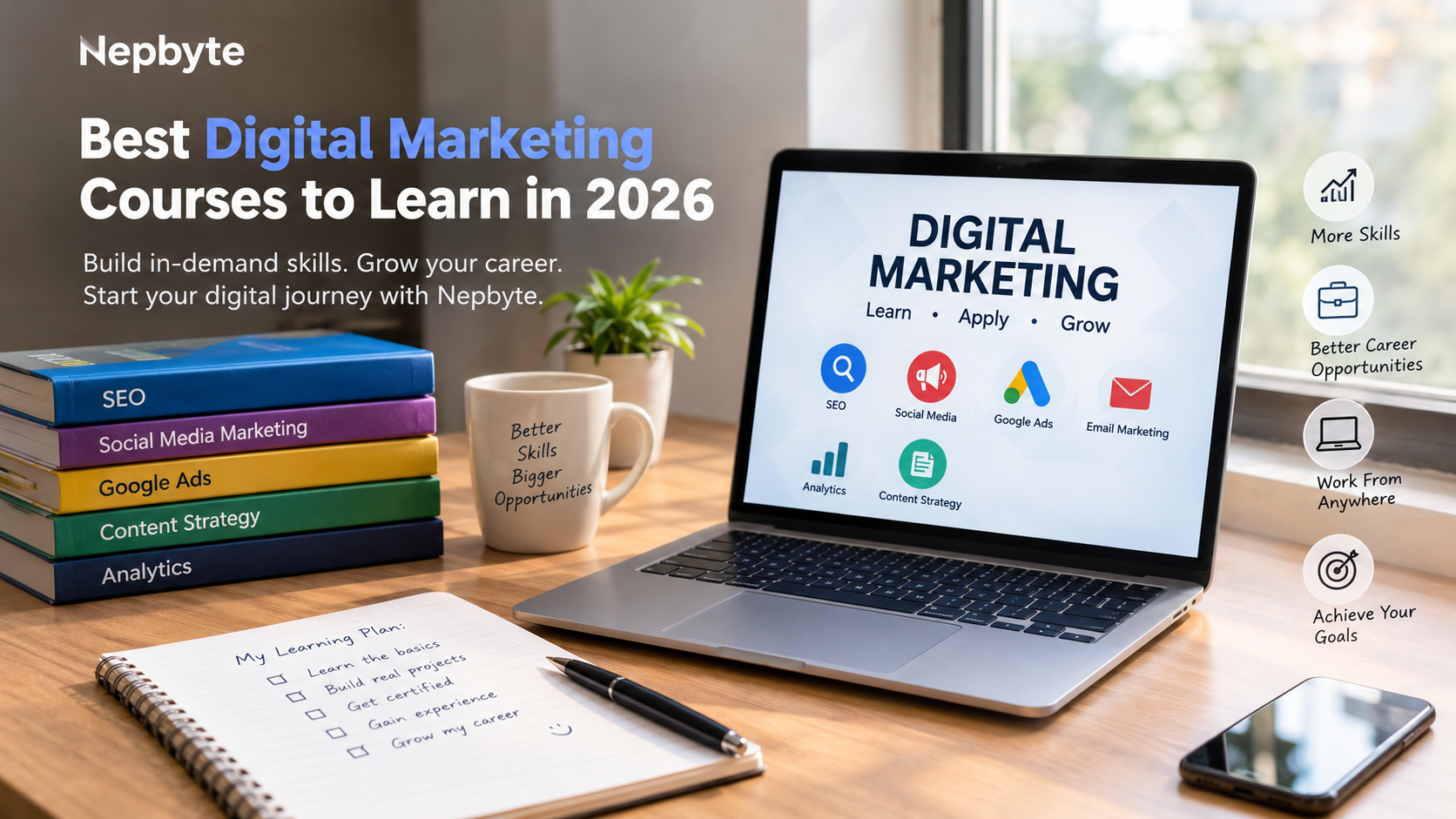
Best Digital Marketing Courses to Learn in 2026
Best Digital Marketing Course for Beginners: A Complete Guide to Building Practical Skills
Digital marketing has become an essential part of how businesses attract customers, build brand awareness, and grow online. As companies increasingly invest in websites, search engine optimization (SEO), social media, and online advertising, the demand for professionals with practical digital marketing skills continues to grow.
Whether you want to start a career in digital marketing, promote your own business, or explore freelance opportunities, choosing the right digital marketing course is an important first step. However, the best course is not necessarily the most expensive or the one offering the most certificates. It is the one that helps you understand digital marketing strategies and apply them to real-world business challenges.
At Nepbyte, we believe that technology and digital marketing work best together. A well-developed website, a strong online presence, and a data-driven marketing strategy can help businesses reach the right audience and build sustainable growth.
In this guide, we explain how to choose a digital marketing course, which skills to prioritize, and how to turn your learning into practical experience.
What Should a Good Digital Marketing Course Include?
A comprehensive digital marketing course should cover the essential channels and techniques businesses use to reach their target audiences online.
Before enrolling, look for a curriculum that includes the following areas:
-
Search Engine Optimization (SEO): Learn keyword research, on-page optimization, technical SEO, content optimization, link building, and search performance analysis.
-
Google Ads and Paid Advertising: Understand campaign setup, audience targeting, budget management, conversion tracking, and return on advertising spend.
-
Social Media Marketing: Learn how to create content, manage business accounts, develop social media strategies, and measure audience engagement.
-
Content Marketing: Discover how to plan, create, and optimize content that answers customer questions and supports business objectives.
-
Email Marketing: Understand email campaigns, audience segmentation, automation, and lead nurturing.
-
Web Analytics: Learn to interpret website traffic, user behavior, campaign performance, and conversion data using tools such as Google Analytics.
-
Conversion Rate Optimization (CRO): Understand how landing pages, website design, calls to action, and user experience influence conversions.
-
AI-Assisted Marketing: Explore how artificial intelligence can support research, content planning, campaign analysis, and marketing workflows while maintaining accuracy and human oversight.
A good course should explain not only how these channels work but also how they support broader business goals, such as generating qualified leads, increasing sales, and improving customer retention.
Is Google's Digital Marketing Course a Good Starting Point?
For beginners, Google's digital marketing training and other recognized learning resources can provide a useful foundation. They introduce important marketing concepts and help learners understand how businesses connect with customers through digital channels.
Google offers learning resources through platforms such as Google Skillshop and Google Career Certificates. The available courses, certification requirements, and fees vary by program.
Beginners should focus on understanding the fundamentals before investing heavily in advanced training. Learning about SEO, paid advertising, analytics, and customer behavior will make it easier to choose a specialization later.
However, completing a course or earning a certificate does not automatically qualify someone for every digital marketing role. Employers and clients also look for practical skills, communication, analytical thinking, and the ability to demonstrate results.
Our recommendation: Start with foundational learning, complete relevant certifications, and apply what you learn through real projects.
How to Choose the Right Digital Marketing Learning Format
Digital marketing courses are available in different formats. The right choice depends on your schedule, learning preferences, budget, and career goals.
Self-Paced Online Courses
Self-paced courses allow you to study whenever it suits you. They are ideal for students, working professionals, entrepreneurs, and beginners who want an affordable way to learn.
Instructor-Led Training
Live classes provide opportunities to ask questions, receive feedback, and learn from an instructor's practical experience. This format may be useful for learners who prefer a structured schedule.
Practical Workshops and Bootcamps
Workshops and bootcamps focus on applying marketing concepts through exercises, campaign planning, and project-based learning. Some also provide mentorship and portfolio development.
Industry-Based Learning
Working on actual business websites, marketing campaigns, and analytics reports can help learners understand how digital marketing operates beyond the classroom.
At Nepbyte, we believe that combining structured learning with practical implementation is an effective way to develop job-ready skills.
Why Practical Experience Matters More Than Certificates Alone
Digital marketing is a results-oriented field. Understanding a concept is important, but knowing how to implement it and evaluate its performance is equally valuable.
After completing a beginner course, start applying your knowledge through small projects.
Here are some practical ways to build experience:
-
Create a simple website or blog and optimize its pages for search engines.
-
Conduct keyword research and develop a content strategy for a specific industry.
-
Set up a social media content calendar for a business or personal brand.
-
Practice Google Ads campaign planning using a defined audience and budget.
-
Learn how to measure website traffic and user engagement through analytics tools.
-
Prepare a sample SEO audit identifying technical issues, content gaps, and optimization opportunities.
-
Build a portfolio documenting your objectives, methods, results, and lessons learned.
You do not need a large advertising budget to begin learning. Website audits, keyword research, content planning, and analytics exercises can provide valuable practice without launching paid campaigns.
When you do work with real businesses, obtain the necessary permissions before accessing their websites, advertising accounts, or customer data.
How Digital Marketing Supports Business Growth
Digital marketing is more than posting on social media or running advertisements. It involves understanding customer needs and using appropriate digital channels to attract, engage, and convert potential customers.
For example, a business may have an attractive website but receive very little organic traffic. An SEO strategy can help improve its search visibility, while useful content can answer customer questions and build credibility.
A business seeking faster lead generation may benefit from targeted advertising, conversion-focused landing pages, and proper campaign tracking. Social media can support brand awareness, while email marketing can help maintain relationships with existing customers.
These channels are most effective when they work together as part of a clear marketing strategy.
At Nepbyte, we recognize the importance of aligning digital marketing with website performance, user experience, search visibility, and measurable business objectives. This integrated approach helps businesses make more informed decisions about their online presence.
A Step-by-Step Digital Marketing Learning Roadmap
Rather than taking unrelated courses, follow a structured learning path that develops your skills progressively.
Step 1: Learn the Fundamentals
Understand digital marketing terminology, customer journeys, target audiences, branding, marketing funnels, and campaign objectives.
Step 2: Build a Strong SEO Foundation
Learn keyword research, on-page SEO, technical SEO fundamentals, content optimization, internal linking, and search performance measurement.
Step 3: Explore Paid Advertising
Study Google Ads and social media advertising, including campaign structure, targeting, budget allocation, conversion tracking, and performance analysis.
Step 4: Develop Content and Social Media Skills
Practice writing useful content, planning social media campaigns, designing creative assets, and maintaining a consistent brand voice.
Step 5: Learn Analytics and Reporting
Use analytics and reporting tools to understand traffic sources, user behavior, lead generation, and campaign performance.
Step 6: Build a Portfolio
Document your projects, explain the strategies you used, and include measurable results when reliable data is available.
Step 7: Specialize and Continue Learning
Choose an area such as SEO, paid advertising, content marketing, email automation, or digital analytics. Continue learning as platforms, tools, and industry practices evolve.
This progression helps beginners move from understanding marketing concepts to developing practical skills that can be applied in professional settings.
How to Evaluate a Digital Marketing Course Provider
Before paying for a course, evaluate its quality and relevance rather than relying solely on promotional claims.
Consider the following factors:
-
Curriculum quality: Does the course cover the skills you actually want to learn?
-
Content freshness: Are lessons updated to reflect current platforms, tools, and industry practices?
-
Instructor experience: Does the instructor have relevant professional knowledge or practical experience?
-
Hands-on assignments: Will you complete projects, audits, campaign plans, or portfolio exercises?
-
Feedback and mentorship: Can you receive useful guidance on your work?
-
Student reviews: Do reviews provide specific, credible details about the learning experience?
-
Cost and value: Does the price reflect the instruction, practical support, and resources provided?
-
Certification details: Is the credential issued by a recognized organization, and what does it actually demonstrate?
Be cautious of providers promising guaranteed jobs, immediate earnings, or rapid business growth simply for completing a course.
A credible learning program should set realistic expectations and help students understand the effort required to develop professional competence.
Digital Marketing Course vs. University Degree
A university degree and a professional digital marketing course serve different purposes.
A university degree generally provides broader academic knowledge, including business management, marketing principles, economics, and related subjects. Specialized digital marketing courses typically focus on particular platforms, tools, and practical techniques.
The right option depends on your career objectives, budget, and available time.
For some learners, a degree combined with professional certifications provides a strong foundation. Others may prefer to begin with affordable online courses and practical projects before pursuing further education.
Regardless of the path you choose, the ability to demonstrate relevant skills remains important when applying for jobs or seeking freelance clients.
How Much Should You Spend on Digital Marketing Training?
Digital marketing education ranges from free learning resources to paid courses, structured training programs, and premium bootcamps.
If you are a beginner, start with free resources and identify the areas where you need more guidance. Consider paying for advanced training when it provides clear additional value, such as expert feedback, practical assignments, mentorship, or career support.
Before purchasing a course, compare its total cost with the benefits it offers. Check whether software subscriptions, advertising budgets, examination fees, or other expenses are included.
Remember that you can develop valuable skills without purchasing multiple certifications. A small number of relevant courses combined with consistent practical work can be more useful than collecting certificates without applying the knowledge.
Digital Marketing Careers and Freelance Opportunities
Digital marketing skills can lead to a variety of career paths, depending on your interests and experience.
Potential roles include:
-
SEO Specialist
-
Digital Marketing Executive
-
Google Ads Specialist
-
Social Media Manager
-
Content Marketing Specialist
-
Email Marketing Specialist
-
Digital Marketing Analyst
-
Performance Marketing Specialist
-
Freelance Digital Marketer
Beginners can start by building a portfolio, completing relevant projects, and applying for entry-level positions or suitable freelance assignments.
If you plan to work independently, learn how to communicate with clients, prepare proposals, define project scope, report progress, and set realistic expectations.
A professional portfolio should explain the problem you addressed, the strategy you followed, and the results you achieved. If a project is simulated or based on sample data, identify it clearly rather than presenting it as a real client success story.
The Role of SEO, AEO, GEO, and AI in Modern Marketing
Search and digital discovery continue to evolve. In addition to traditional SEO, marketers increasingly discuss Answer Engine Optimization (AEO) and Generative Engine Optimization (GEO).
These approaches focus on helping content become more useful, understandable, and discoverable across different search and AI-powered information experiences.
Beginners should first develop a solid understanding of technical SEO, search intent, content quality, website structure, and audience needs. These fundamentals provide a strong basis for exploring emerging optimization practices.
AI tools can assist with research, content ideation, data analysis, and workflow efficiency. However, effective marketing still requires human judgment, factual verification, original insights, and a clear understanding of the intended audience.
At Nepbyte, we see the combination of technology, high-quality content, and strategic marketing as an important part of building a sustainable digital presence.
How Nepbyte Approaches Digital Growth
Nepbyte is an IT-focused brand that recognizes the relationship between technology and online business performance. A website should do more than look attractive; it should help visitors understand a business, discover its services, and take meaningful action.
Digital marketing works best when it is aligned with a company's website, audience, goals, and overall online strategy.
Depending on business needs, this may involve website development, SEO, content planning, social media marketing, paid advertising, or improvements to website usability and conversion paths.
For learners and business owners alike, understanding how these elements work together provides a more complete perspective on digital growth.
Explore the Nepbyte website and marketing services to learn more about our digital marketing offerings.
Frequently Asked Questions
Which digital marketing course is best for beginners?
A good beginner course covers SEO, social media marketing, paid advertising, content creation, and analytics. Google learning resources can be a useful starting point, followed by practical projects and specialized training.
Is Google's Digital Marketing Course free?
Google provides various free digital marketing learning resources, including Google Skillshop training. Other programs, such as Google Career Certificates, may have fees or subscription costs. Check the current terms of the specific program before enrolling.
How long does it take to learn digital marketing?
The basics can often be learned in one to three months with consistent study, although the time required depends on the curriculum and your schedule. Developing professional-level skills usually requires continued practice and real-world experience.
Can I get a job after completing a digital marketing course?
A course can help you develop foundational knowledge, but employment is not guaranteed. Practical skills, communication, portfolio projects, and the ability to demonstrate your understanding of marketing principles can improve your prospects.
Do I need coding skills to learn digital marketing?
No. Most entry-level digital marketing activities do not require programming. However, basic knowledge of HTML, website structure, analytics implementation, and technical SEO can be beneficial for certain roles.
Is digital marketing a good option for freelancing?
It can be a suitable career path for people who develop marketable skills and learn how to manage client relationships. SEO, content marketing, paid advertising, and social media management are potential service areas, but success depends on expertise, communication, and consistent delivery.
Should I choose a free or paid digital marketing course?
Start with free resources if you are new to the field. Consider paid training when you need more structured instruction, expert feedback, practical assignments, or specialized knowledge.
Are SEO, AEO, and GEO worth learning?
SEO provides an important foundation for improving search visibility. AEO and GEO are emerging areas of interest related to answer engines and generative AI experiences. Learn the established fundamentals first and evaluate newer practices based on credible evidence and changing industry developments.
How can I practice digital marketing without a client?
Create a personal website, develop a sample content strategy, conduct an SEO audit, build a mock advertising plan, or analyze publicly available marketing data. Clearly label simulated projects and focus on explaining your methods and findings.
Conclusion
Choosing the best digital marketing course is about finding a learning path that matches your goals, budget, and preferred learning style. Begin with reliable foundational resources, develop skills across essential marketing channels, and build practical experience through projects that demonstrate your abilities.
As you progress, specialize in areas that match your interests, strengthen your analytical skills, and keep up with changes in search, advertising, content, and AI-assisted marketing.
At Nepbyte, we believe that successful digital growth comes from combining technology, strategic thinking, and practical implementation. Whether you are learning digital marketing for a new career or looking to improve your business's online presence, focus on developing useful skills, measuring performance, and continuously improving your approach.
Learn consistently. Apply your knowledge. Build measurable value.
React to this post
Related Articles