

Related Articles






What Is PHP? Inside the Cybersecurity Scare That Sparked a Global Scramble
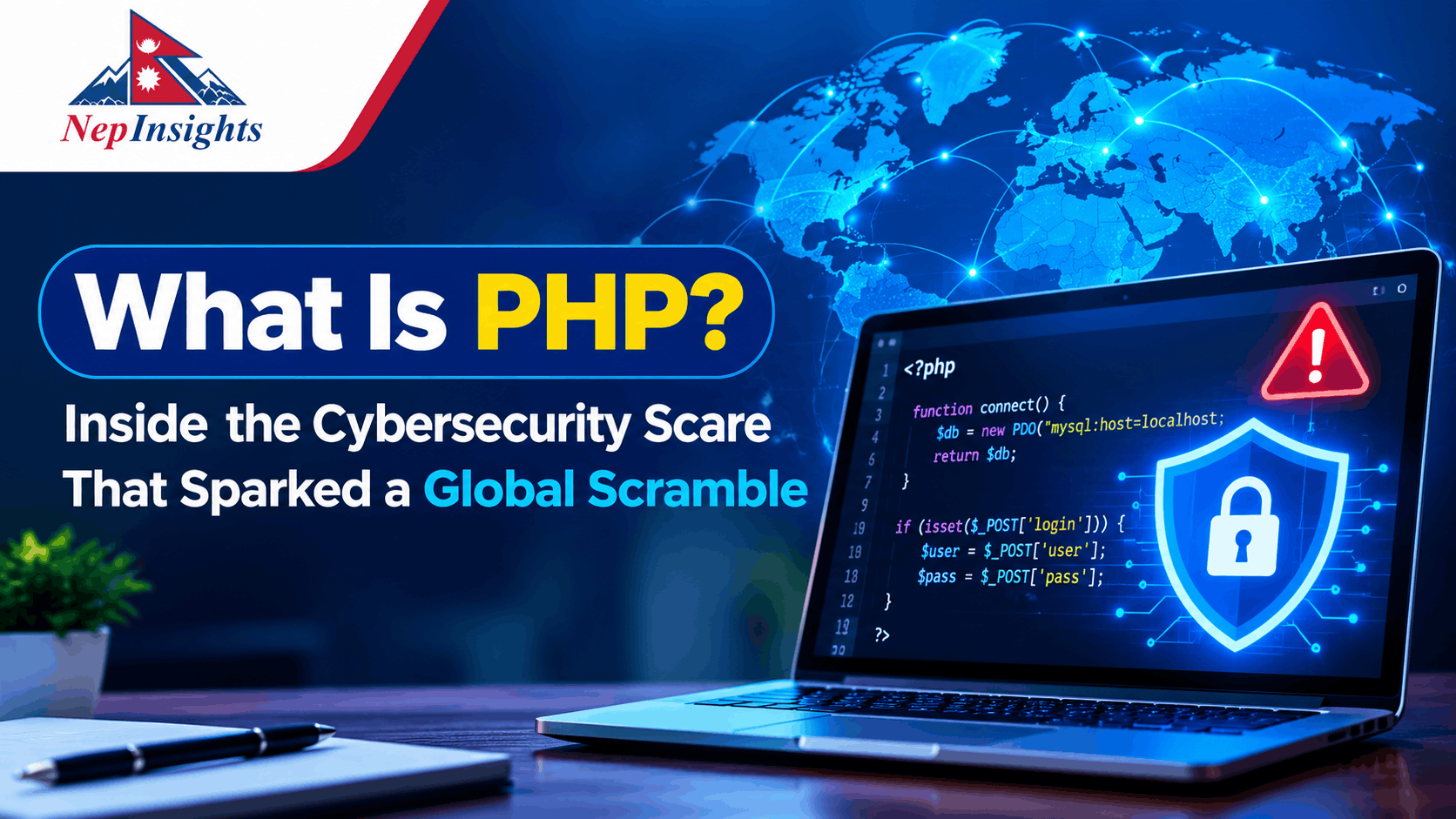
What Is PHP? Inside the Cybersecurity Scare That Sparked a Global Scramble
A major cybersecurity alert has put one of the internet’s most widely used programming languages under the spotlight. PHP, the technology behind countless websites, online shops, content management systems and digital services, became the focus of an international security response after researchers uncovered two critical vulnerabilities in October 2026.
The discovery prompted government agencies, security teams and website operators to urgently review their systems, apply security fixes and, in some cases, temporarily take websites offline.
The incident also highlighted the growing role of artificial intelligence (AI) in cybersecurity. Researchers used AI-assisted techniques to help identify serious weaknesses in software that has been powering the internet for decades.
But what exactly is PHP, why are these vulnerabilities so serious, and what should website owners do to protect their platforms?
What Is PHP?
PHP stands for PHP: Hypertext Preprocessor. It is a free, open-source, server-side scripting language used to develop dynamic websites and web applications.
Unlike HTML, which structures the content displayed in a browser, PHP executes on a web server. It can process form submissions, communicate with databases, manage user sessions, handle authentication and generate the content delivered to visitors.
For example, when someone logs into an online store, PHP may help verify their account, retrieve product information, manage their shopping cart and display personalised content.
PHP is widely used because it is flexible, supported by many hosting providers and compatible with established databases and web technologies.
Popular platforms and frameworks that use PHP include:
-
WordPress: A content management system used by blogs, business websites and publishers.
-
Laravel: A PHP framework for building modern web applications, APIs and business platforms.
-
Drupal: A content management system used by organisations and government institutions.
-
Symfony: A PHP framework and collection of reusable components for software development.
-
WooCommerce: An e-commerce platform built on WordPress and PHP.
PHP’s extensive use means that a weakness in the language can have consequences far beyond a single website or company.
Why Did PHP Trigger a Global Cybersecurity Alert?
In October 2026, researchers and cybersecurity organisations disclosed two critical vulnerabilities affecting PHP. The issues, associated with the name PHP2Shell, raised concerns because they could potentially allow attackers to execute commands remotely on vulnerable servers without first authenticating themselves.
The UK National Cyber Security Centre issued an alert identifying the vulnerabilities as CVE-2026-109618 and CVE-2026-109619.
The vulnerabilities received critical severity assessments, and authorities urged organisations to take immediate action to secure affected systems.
The problem was not that PHP itself was malicious or unsafe to use. Rather, weaknesses in important parts of its underlying implementation created potential opportunities for attackers under certain conditions.
Because PHP is deployed across a vast range of websites and applications, administrators had to determine whether their servers were affected, identify the relevant software versions and apply appropriate fixes.
Read the official advisory from the UK National Cyber Security Centre.
What Is the PHP2Shell Vulnerability?
PHP2Shell refers to the security issue associated with the newly disclosed PHP vulnerabilities. The central concern is the possibility of remote code execution, a class of vulnerability that can allow an attacker to run unauthorised commands on a targeted server.
Depending on the affected system, its configuration and the attacker's level of access, successful exploitation could have serious consequences.
Potential risks include:
-
Data theft: Attackers may attempt to access sensitive customer information, credentials or other confidential data.
-
Website defacement: Malicious actors could alter website content or display unauthorised messages.
-
Server compromise: An attacker might attempt to gain control over vulnerable server processes or systems.
-
Malware installation: A compromised server could potentially be used to host malicious files or support further attacks.
-
Service disruption: Attacks or emergency security measures could make websites temporarily unavailable.
These are potential consequences, not proof that every PHP website has been compromised. Actual exposure depends on the vulnerability, software version, server configuration and whether the appropriate security updates have been installed.
The most important distinction is that a security vulnerability creates an opportunity for an attack; it does not automatically mean an attack has succeeded.
How Did AI Help Discover the PHP Security Flaws?
Artificial intelligence is increasingly being used to assist cybersecurity researchers in identifying weaknesses in software, analysing source code and testing potential security problems.
In the PHP incident, AI-assisted research helped bring attention to vulnerabilities that had remained undetected for years. Researchers and security organisations worked to investigate the flaws, validate their significance and coordinate the response.
AI can help security teams examine large codebases, identify suspicious patterns and explore how seemingly minor programming errors might lead to serious security consequences.
However, AI does not replace experienced security researchers. Findings still need to be validated, potential fixes carefully tested and security updates reviewed before deployment.
The incident illustrates both the benefits and risks of more capable AI tools. They can help defenders discover problems faster, but similar capabilities may also help malicious actors understand and exploit vulnerabilities.
As AI-assisted security research develops, maintaining secure software will increasingly require effective collaboration between developers, researchers, software maintainers and infrastructure providers.
Why Were Websites Taken Offline?
When a critical vulnerability is disclosed, organisations must balance two competing priorities: keeping digital services available and preventing attackers from exploiting vulnerable systems.
Some organisations may temporarily disable affected websites or services if they cannot apply a security fix quickly enough or establish an effective temporary mitigation.
Taking a website offline can reduce exposure while administrators investigate the problem, update software and verify that their systems are safe to restore.
This can be particularly important for government portals, public services, online platforms and organisations that handle sensitive information.
Temporary outages do not necessarily indicate that a website has been hacked. In some cases, taking a service offline is a precautionary security measure intended to prevent a possible compromise.
For website operators, the incident reinforces the importance of having a reliable update process, a tested backup strategy and a clear incident-response plan.
Does the PHP Security Scare Affect WordPress Websites?
WordPress websites deserve particular attention because WordPress relies heavily on PHP and is used by millions of website owners worldwide.
However, not every WordPress website is automatically vulnerable simply because it uses PHP. The relevant PHP runtime, server environment and configuration determine whether the newly disclosed flaws affect a particular installation.
Another important point is that updating WordPress themes and plugins alone may not fix a vulnerability in the underlying PHP runtime.
Website owners should verify that the PHP version running on their hosting server includes the applicable security fixes. They should also keep WordPress core, themes, plugins and server software updated.
For businesses using managed hosting, the hosting provider may control the PHP runtime. In that situation, website owners should ask the provider to confirm whether the affected PHP versions have been patched.
Laravel, Drupal and other PHP-based applications also require appropriate checks at the server level. Updating application dependencies is valuable, but it should not be treated as a substitute for patching the underlying PHP installation when a PHP-level vulnerability is involved.
How Can Website Owners Protect Their Websites?
Website owners and administrators should take a structured approach to securing their systems.
1. Check the PHP version
Identify the PHP version used by the actual web server, not just the version installed in a local development environment or shown by the command line.
For Linux servers, administrators with appropriate access can check the CLI version using:
php -vThis command provides a useful starting point, but the PHP-FPM service or hosting configuration may use a different version. Verify the version that serves the website.
2. Install the relevant security updates
Follow the official PHP security advisories and your operating system or hosting provider's guidance. Upgrade to a supported, patched PHP release appropriate for your application.
Before making production changes, back up the website and database, review compatibility requirements and test the update where practical.
3. Contact your hosting provider
If your website is hosted on shared hosting or a managed platform, ask the provider whether the PHP vulnerabilities have been addressed.
Request confirmation of the PHP runtime version, applicable security fixes and any additional mitigation measures required for your hosting environment.
4. Review server logs and suspicious activity
Check web server, PHP and application logs for unusual requests, unexpected errors, unfamiliar processes or other indicators of compromise.
If you suspect an intrusion, do not assume that installing a patch removes an existing attacker from the system. Investigate the incident and follow an appropriate recovery process.
5. Maintain secure backups
Keep recent backups of website files, databases and important configuration. Store protected copies separately from the production server and periodically test whether you can restore them.
Backups can help recovery, although they do not replace security updates or incident investigation.
6. Strengthen access controls
Use strong, unique passwords, multi-factor authentication where available, restricted administrative access and the principle of least privilege.
Review unnecessary services, permissions and exposed management interfaces. These measures can reduce the impact of a compromise, even when they do not directly address a particular PHP vulnerability.
7. Monitor official security advisories
Follow updates from the PHP project, your hosting provider and recognised cybersecurity authorities. Security recommendations may change as researchers learn more about exploitation techniques and available mitigations.
The PHP official website is a useful starting point for checking PHP releases and security information.
What Should Ordinary Internet Users Do?
Most people who simply browse websites do not need to update PHP themselves. The responsibility for patching a website's server generally rests with its owner, administrator or hosting provider.
Nevertheless, users can take sensible precautions:
-
Use unique passwords for important accounts.
-
Enable multi-factor authentication where available.
-
Be cautious of unexpected emails, password-reset requests and suspicious links.
-
Monitor financial accounts if a service you use reports a data breach.
-
Follow official notices from affected websites and service providers.
A cybersecurity alert can also create opportunities for scammers to send fake security warnings. Avoid downloading unknown software or entering login details through links in unexpected messages.
If a website requests a password change following a confirmed security incident, navigate to its official website independently rather than relying on an unsolicited link.
What Does the PHP Incident Mean for the Future of Website Security?
The PHP security scare demonstrates how weaknesses in widely deployed infrastructure can become a global concern.
A programming language may be only one component of a modern website, but a vulnerability in that component can affect applications across different industries, hosting providers and countries.
The incident also highlights the importance of maintaining mature open-source projects. Popular software requires sustained investment in code review, security testing, maintenance and timely vulnerability disclosure.
AI-assisted research could help identify additional software weaknesses in the future. At the same time, organisations need the people, funding and processes required to validate discoveries and distribute reliable fixes.
For developers and website owners, the lesson is straightforward: security cannot end when an application is launched. It must remain part of the ongoing development, deployment and maintenance process.
Frequently Asked Questions (FAQs)
What is PHP used for?
PHP is a server-side programming language used to build dynamic websites, process requests, interact with databases and develop web applications. It powers platforms such as WordPress and frameworks such as Laravel.
What is the PHP2Shell vulnerability?
PHP2Shell is the name associated with the critical PHP security issue disclosed in October 2026. The reported vulnerabilities could allow remote code execution on affected systems under certain conditions.
Why did the PHP vulnerability cause a global security response?
PHP is widely deployed across websites and applications. The possibility of unauthenticated remote code execution meant organisations needed to assess exposure, apply fixes and consider temporary service restrictions where necessary.
Does updating WordPress fix PHP vulnerabilities?
Not necessarily. WordPress updates address WordPress core and other application components, while a vulnerability in the PHP runtime may require a separate server-level PHP update.
Is PHP safe to use in 2026?
PHP remains a widely used programming language. Its security depends on using supported and patched versions, maintaining secure configurations, updating dependencies and following good development practices.
What should website owners do first?
Website owners should determine which PHP runtime serves their applications, check official security advisories, install the relevant fixes and contact their hosting provider if they cannot manage the server directly.
Final Thoughts
PHP remains an important part of the internet, and the October 2026 security alert shows why vulnerabilities in widely used software demand immediate attention.
The incident is not a reason to abandon PHP or assume that every PHP-powered website has been hacked. It is a reminder that even mature technologies require continuous security maintenance.
For developers, businesses and website administrators, the priorities are clear: verify exposure, install the correct security updates, monitor for suspicious activity and maintain a reliable recovery plan.
As AI continues to change cybersecurity research, the ability to discover vulnerabilities must be matched by the ability to fix them quickly and responsibly.
React to this post
Related Articles