
Related Articles






Biska Jatra: Bhaktapur’s Grand Festival of Culture, Tradition, and Celebration
The vibrant city of Bhaktapur comes alive every year with one of Nepal’s most thrilling and culturally rich festivals Biska Jatra. Known for its deep historical roots, intense rituals, and massive public participation, this festival stands as a powerful symbol of tradition, community, and spiritual belief.
Celebrated in mid-April, Biska Jatra marks the transition from the old year to the Nepali New Year (Bikram Sambat). However, despite coinciding with the New Year, the festival itself is not directly tied to it. Instead, it is rooted in ancient religious practices dedicated primarily to Bhairavnath and Bhadrakali, two powerful deities worshipped in the region.
A Festival of Eight Nights and Nine Days
Biska Jatra is also known as Chyacha Gunhuya Jatra, meaning “eight nights and nine days festival.” It is the longest and one of the most significant jatras celebrated in Bhaktapur. During this period, the city transforms into a lively cultural hub filled with rituals, music, traditional attire, and thousands of devotees.
The scale of participation is massive. People from all over Nepal travel to Bhaktapur to witness the celebrations. Streets become crowded, rooftops are filled with spectators, and the atmosphere is charged with excitement and devotion.
The Main Attraction: Yoshing (Lingo) – The Towering Pole
One of the most iconic elements of Biska Jatra is the Yoshing Dyo (also known as Lingo), a tall wooden pole erected at Lyasingkhel.
This pole symbolizes power, protection, and spiritual significance. It is raised with great effort using ropes, representing unity and collective strength. The raising of the pole marks a key moment in the festival and is accompanied by traditional rituals and ceremonies.
Equally important is the lowering of the pole, which takes place on the first day of the Nepali New Year. This event is known as Satruhanta Jatra, meaning “the destruction of enemies.” There is a popular belief that anyone who witnesses the fall of the pole will be freed from enemies and negativity.
The Thrilling Tug-of-War: A Battle of Communities
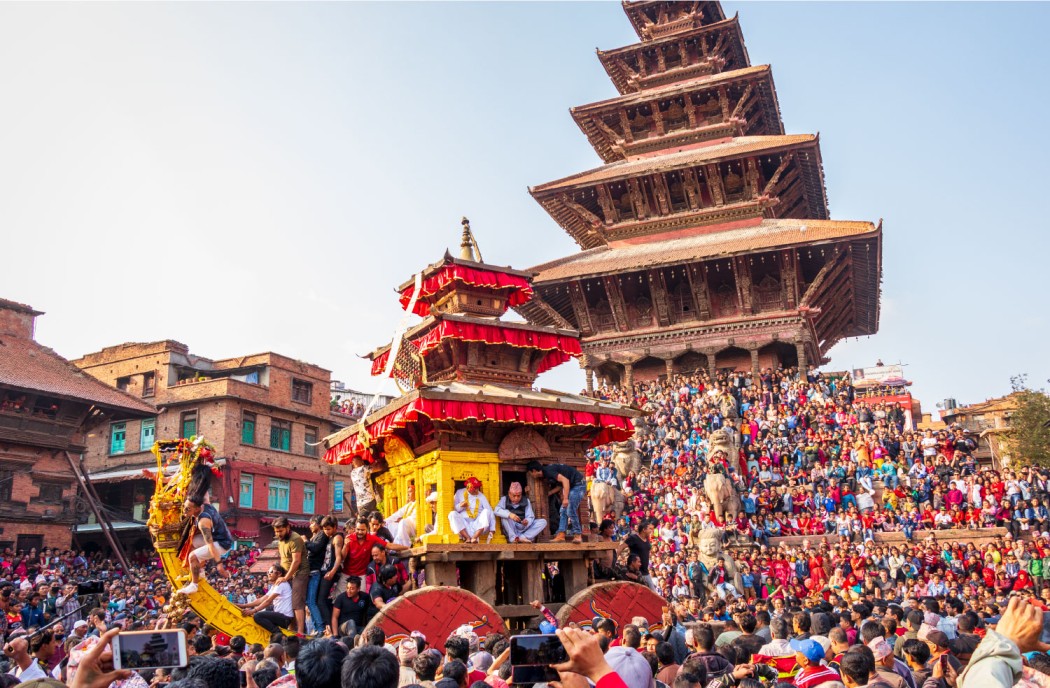
Another major highlight of Biska Jatra is the chariot procession and tug-of-war involving the chariot of Bhairavnath (Bhailakh).
The city is traditionally divided into two parts:
-
Upper City (Thane)
-
Lower City (Kwane)
Both groups compete to pull the massive wooden chariot toward their respective areas. This tug-of-war is not just symbolic it is intense, emotional, and sometimes even dangerous. The uneven number of ropes used adds to the challenge, making the event unpredictable.
The direction in which the chariot moves is believed to bring blessings to that part of the city. This ritual represents unity, rivalry, and devotion all at once.
Bhadrakali Chariot and Ritual Collisions
Alongside Bhairavnath, the chariot of Bhadrakali is also an essential part of the festival. These chariots are pulled through the narrow streets of Bhaktapur, accompanied by traditional music and chanting.
One unique ritual is the collision of the two chariots, known as Dyo Lwakigu Jatra. This symbolic act represents divine interaction and adds to the dramatic nature of the festival.
Sindoor Jatra: Colors, Music, and Celebration
A significant part of Biska Jatra is the Sindoor Jatra, especially celebrated in Madhyapur Thimi.
During this event:
-
Devotees carry multiple chariots of deities
-
People smear each other with red vermillion powder (Sindoor)
-
Traditional music, dancing, and joyful celebrations fill the streets
It resembles the energy of Holi but carries its own cultural and religious meaning. Sindoor Jatra marks joy, unity, and the welcoming of a new season.

The Unique Tongue-Piercing Festival
One of the most unusual and fascinating rituals associated with Biska Jatra takes place in Bode, a nearby town.
Every year, a local volunteer (traditionally from the Shrestha community) participates in a tongue-piercing ceremony. An iron spike is passed through the tongue, and the individual walks around carrying fire torches.
This act is believed to:
-
Bring good luck to the community
-
Prevent natural disasters like drought or floods
-
Ensure prosperity and health
Though intense, this ritual is deeply respected and continues to be an important part of the tradition.
Religious and Cultural Significance
Biska Jatra is not just a festival—it is a reflection of Bhaktapur’s identity. The rituals revolve around:
-
Worship of Bhairavnath and Bhadrakali
-
Celebration of seasonal change (spring/Basanta)
-
Community unity and participation
The banners (Veer-dhwaja and Bishwa-dhwaja) raised with the Yoshing Dyo symbolize divine power and balance. The festival also includes various smaller jatras dedicated to other deities like Mahalaxmi, Mahakali, Brahmayani, and Maheshwari.
Historical Background and Origins
Historically, Biska Jatra dates back to the Malla era. Inscriptions from the time of King Yaksha Malla refer to it as “Bishwa Jatra”, highlighting its ancient roots.
While many people associate the festival with a popular legend about serpents (Nag-Nagini), historians believe that this story is more folklore than fact. According to the tale:
-
A cursed princess caused the mysterious death of her husbands
-
A brave prince discovered two serpents emerging from her nose
-
He killed them, ending the curse
-
The festival began to celebrate this victory
Though widely told, experts suggest that the festival is more deeply connected to religious traditions rather than this myth alone.
The Energy and Experience
What makes Biska Jatra truly special is its raw energy.
-
The streets are packed with thousands of people
-
Traditional instruments echo throughout the city
-
Devotees gather in massive numbers
-
Rituals are performed with intense devotion
It is often described as one of the most exciting and chaotic festivals in Nepal, yet it remains deeply meaningful for locals.
Challenges and Risks
Due to its scale and intensity, Biska Jatra is sometimes considered one of the more dangerous festivals in the world.
-
The tug-of-war can become aggressive
-
Large crowds create pressure and movement challenges
-
Heavy wooden chariots move through narrow streets
Despite this, locals manage the event with experience and tradition, ensuring that the festival continues safely year after year.
A Celebration Beyond Time
Biska Jatra is more than just a festival it is a living tradition that connects generations. It represents:
-
Faith and devotion
-
Cultural identity
-
Community unity
-
Historical continuity
Even in modern times, the people of Bhaktapur proudly preserve this festival, passing it down through generations.
Final Thoughts
Biska Jatra stands as one of Nepal’s most iconic and powerful cultural events. From the towering Yoshing pole to the thrilling chariot battles and vibrant Sindoor celebrations, every moment reflects the rich heritage of Bhaktapur.
For anyone looking to experience Nepal’s traditions at their most intense and authentic, Biska Jatra is truly unforgettable.
React to this post
Related Articles