

Related Articles




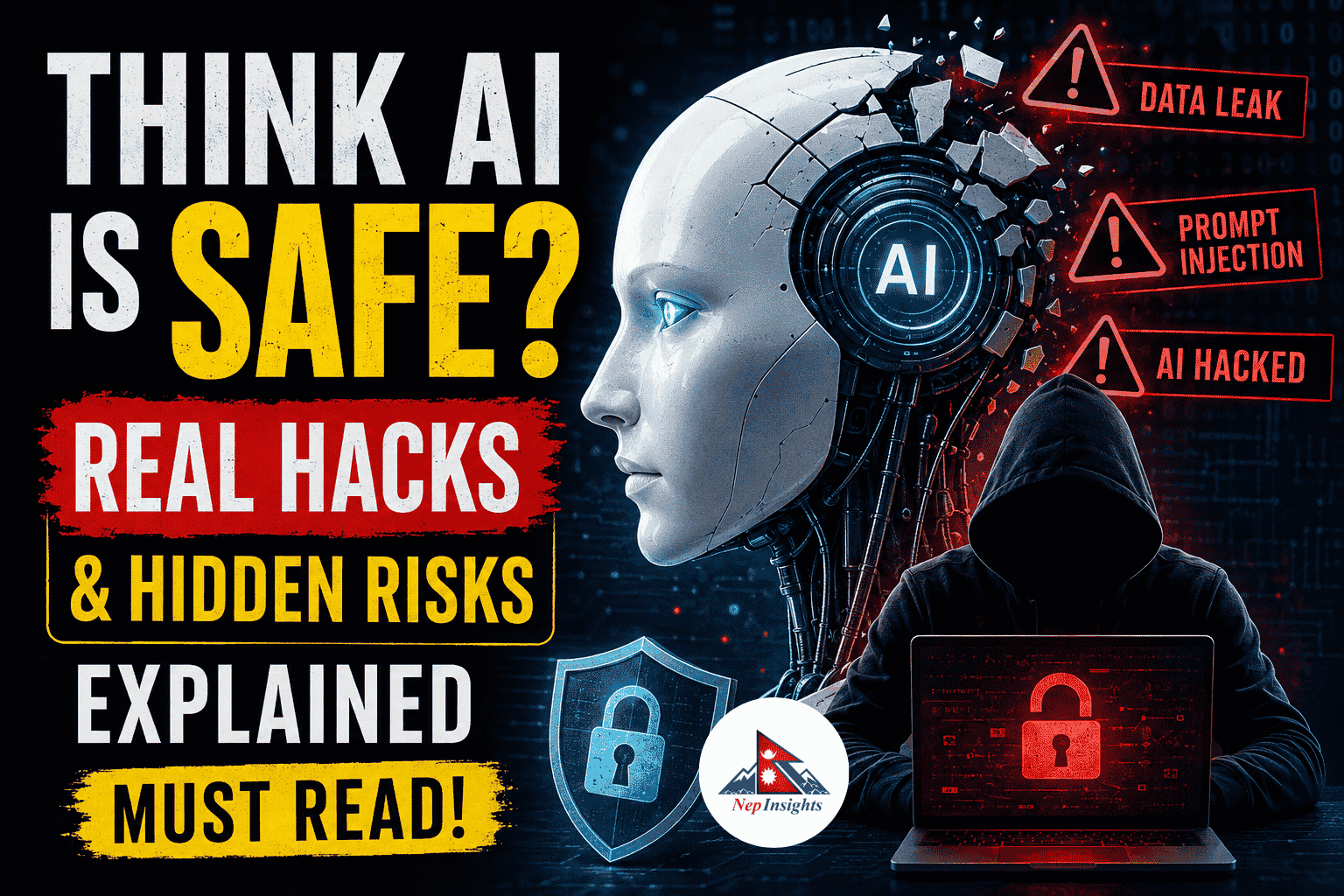
Think AI Is Safe? Real AI Hacks, Cyber Risks And Hidden Dangers Explained
Artificial Intelligence (AI) is now part of everyday life.
It writes emails, answers questions, powers apps, and even helps companies make decisions.
It feels smart. Fast. Reliable.
But there’s a question most people don’t ask:
👉 Is AI actually safe?
The answer is more complicated than you might think.
AI is powerful but it also comes with real risks, real vulnerabilities, and real-world hacking methods already being tested today.
Let’s break it down in a simple, human way.
Can AI Be Hacked?
Yes but not in the traditional way people imagine.
AI does not “think” or “get hacked like a robot in movies.”
Instead, hackers target:
- The data AI uses
- The systems connected to AI
- The inputs users or websites feed into it
👉 In simple terms: AI is not hacked directly, it is manipulated indirectly.
And that’s where the real danger begins.
Real AI Security Risks You Should Know
1. Prompt Injection Attacks (Hidden Commands in AI Inputs)
Prompt Injection Attack\text{Prompt Injection Attack}
This is one of the fastest-growing AI security threats.
Hackers hide instructions inside:
- Websites
- Emails
- Documents
- Chat messages
When AI reads them, it may follow hidden commands without realizing it.
What can happen?
- Safety rules may be ignored
- Sensitive information may be exposed
- AI may perform unintended actions
👉 This is a major concern in modern AI security risks.
2. AI Data Leaks (Privacy Under Threat)
AI systems sometimes store or process large amounts of data.
If security is weak, risks include:
- Chat histories exposed
- Private user data leaked
- Business information accidentally revealed
👉 This is known as an AI data leak, and it has already happened in real systems.
Even big companies are not fully immune if systems are misconfigured.
3. AI-Assisted Cyber Attacks (Hackers Using AI Too)
One of the biggest modern threats is that hackers are now using AI themselves.
They use it to:
- Write convincing phishing emails
- Automate attacks at scale
- Discover system weaknesses faster
👉 This makes cybercrime:
- Faster
- Cheaper
- Harder to detect
In short: AI is not just defending systems , it is also being used to attack them.
4. AI System Vulnerabilities (Hidden Entry Points)
AI systems are often connected to:
- Apps
- APIs
- Databases
- Cloud platforms
If one of these connections is weak, attackers may use AI as a gateway.
Possible outcomes:
- Access to sensitive data
- Execution of unintended commands
- System manipulation through AI outputs
👉 This is why secure integration is just as important as AI itself.
How Hackers Actually Target AI Systems
Hackers rarely “break AI.”
Instead, they exploit weak points around it.
Here are the most common methods:
1. Input Manipulation (Prompt Injection)
Hackers trick AI using hidden or crafted instructions.
👉 The AI thinks it’s following normal input but it’s actually being manipulated.
2. Data Poisoning
Attackers corrupt training data.
This causes AI to:
- Learn incorrect patterns
- Produce biased results
- Make unsafe decisions
3. API & System Exploits
If AI is connected to external systems:
- Hackers target APIs
- Exploit weak authentication
- Access connected databases
4. Model Extraction or Leakage
Attackers attempt to:
- Copy AI behavior
- Extract sensitive model information
- Reverse-engineer systems
Hidden Risks of AI (Beyond Hacking)
Even if no hacker is involved, AI still has risks.
Overdependence on AI
People may rely too much on AI and reduce:
- Critical thinking
- Problem-solving skills
- Creativity
Inaccurate or Biased Information
AI can still produce:
- Wrong answers
- Outdated data
- Biased responses
👉 That’s why verification is always important.
Privacy Concerns
If systems are misused or breached:
- Personal data may be exposed
- Sensitive conversations may be stored improperly
Reduced Creativity
Overusing AI tools may reduce:
- Original thinking
- Innovation
- Independent problem-solving
Simple Way to Understand AI Risk
Think of AI like a smart assistant inside a building.
- Strong security → AI is safe
- Weak security → risks increase
- Trick the assistant → incorrect actions
👉 The assistant is not dangerous but the environment matters.
How to Stay Safe While Using AI
You don’t need to stop using AI.
You just need to use it wisely.
✔ Best practices:
- Never share passwords or sensitive data
- Always verify AI-generated information
- Don’t blindly trust AI code or instructions
- Use AI as a helper not a decision-maker
- Keep systems and apps updated
The Future of AI Security
AI security is improving rapidly.
Companies are investing in:
- Advanced threat detection
- Safer AI architectures
- Stronger data protection
But at the same time:
👉 Hackers are also evolving.
This creates an ongoing security race between protection and exploitation.
Final Thoughts
AI is powerful—but not perfect.
✔ AI can be hacked indirectly
✔ Real vulnerabilities already exist
✔ Risks include data leaks, manipulation, and misuse
But here’s the key point:
AI is not the problem, how it is used and secured is.
Awareness is your strongest defense.
Quick Summary
- AI can be manipulated indirectly
- Prompt injection is a major threat
- Data leaks and API vulnerabilities exist
- Hackers also use AI tools
- Safe usage = smart + cautious usage
FAQ (SEO + AdSense Optimized)
1. Can AI be hacked easily?
No. AI is not easily hacked directly, but systems around it can be exploited.
2. What is the biggest AI security risk?
Prompt injection attacks and data leaks are currently among the biggest risks.
3. Can hackers use AI for cyber attacks?
Yes. Hackers already use AI to automate phishing and find vulnerabilities.
4. Is AI dangerous for personal data?
It can be if systems are insecure or users share sensitive information.
5. How do I stay safe using AI?
Avoid sharing private data, verify outputs, and use AI responsibly.
React to this post
Related Articles