
Related Articles






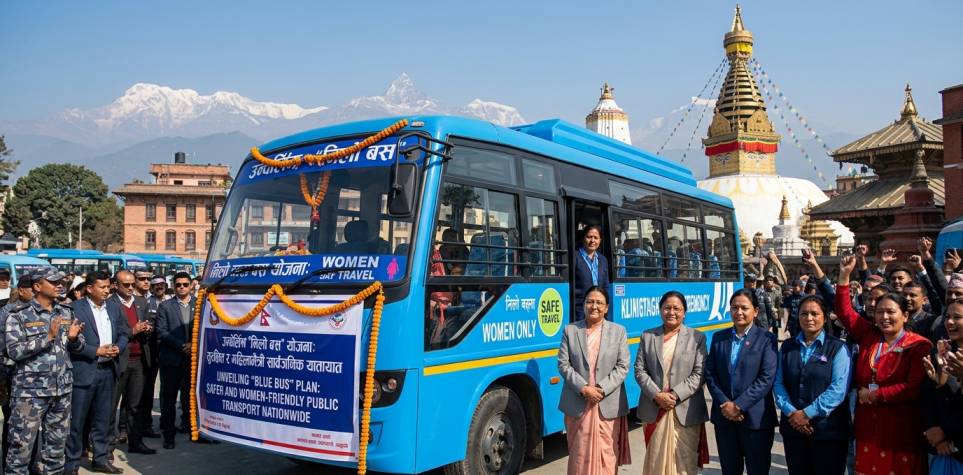
Nepal Unveils ‘Blue Bus’ Plan to Promote Safer and Women-Friendly Public Transport Nationwide
The Government of Nepal has introduced an ambitious plan to improve public transportation by launching “Blue Buses” across all seven provinces, aiming to make travel safer and more accessible, especially for women.
The initiative was approved during a recent Cabinet meeting under the “One Hundred Agendas for Governance Reform,” where it highlights the goal of ensuring secure and gender-friendly commuting.
As part of the first phase, the government plans to deploy at least 25 buses within the next 100 days. While the announcement has been widely welcomed, experts and stakeholders have raised concerns about its long-term sustainability and proper implementation.
Chitwan Model Inspires National Plan
Before this national announcement, a similar Blue Bus service had already been operating in Chitwan, initiated by the Rastriya Swatantra Party (RSP). The service connected Shaktikhor (Kalika Municipality) to Bharatpur and mainly focused on providing free transportation for women.
However, the service is currently suspended due to technical issues and legal restrictions during the election period. According to local leaders, the program had been running for nearly four years and was funded entirely through personal contributions, costing around NPR 100,000–150,000 per month.
Although primarily targeted at women, the service also benefited elderly people, patients, children, and new mothers, offering much-needed support in rural areas.
Experts See Potential but Warn of Challenges
Transport expert and lawmaker Ashish Gajurel described the Blue Bus initiative as a positive step toward modernizing Nepal’s public transport system. He emphasized that ensuring safe travel for women can significantly increase their participation in jobs and economic activities.
He also pointed out that similar practices exist in cities like New Delhi, where special transport provisions improve safety and accessibility.
However, Gajurel criticized past failures, such as the Rapid Bus Service in Kathmandu, which he believes collapsed due to poor planning and lack of commitment. He argued that without strong leadership and a clear system, the Blue Bus project could face the same fate.
Transport Operators Highlight Implementation Issues
Transport entrepreneurs have also expressed cautious support for the plan. Acting Chairman of the Nepal Transport Entrepreneurs National Federation, Saroj Sitoula, stated that while subsidized or free travel for women and vulnerable groups is beneficial, execution remains the biggest challenge.
He noted that previous initiatives like Night Bus services and women-focused transport programs failed due to weak infrastructure and poor monitoring. According to him, simply launching buses is not enough—there must be clear financial planning, proper management, and effective regulation.
Need for Electric Buses and Sustainable Planning
Both experts and industry representatives stressed the importance of adopting electric vehicles for the Blue Bus program.
The earlier Chitwan experience showed that diesel buses are expensive to operate and environmentally harmful. As a result, stakeholders recommend that the upcoming buses should be electric, supported by:
- Charging infrastructure
- Dedicated priority lanes
- Efficient traffic management systems
Without these improvements, the project risks becoming another short-lived initiative.
The Blue Bus plan has the potential to transform Nepal’s public transport system, especially by improving safety for women, senior citizens, and vulnerable groups. The success of the Chitwan model demonstrates both the demand and the benefits of such services.
However, experts warn that strong planning, proper funding, and strict monitoring are essential for long-term success. Simply introducing buses without a sustainable system could turn this promising initiative into just another short-term announcement.
For the government to meet its goal of launching 25 buses within 100 days, it must focus not only on rollout but also on building a reliable, efficient, and inclusive transport system.
React to this post
Related Articles