
Related Articles





RSP to Choose Parliamentary Party Leader After Election Victory
After the final results of the House of Representatives elections were published, the Rastriya Swatantra Party (RSP) is preparing to move ahead with the process of electing its parliamentary party leader.
The results of the election held on Falgun 21 were officially released on Thursday by the Election Commission of Nepal. According to the published results, the RSP has achieved a major electoral success, winning 125 seats under the first-past-the-post system and 57 seats through proportional representation, bringing the party’s total representation to 182 seats in the House of Representatives.
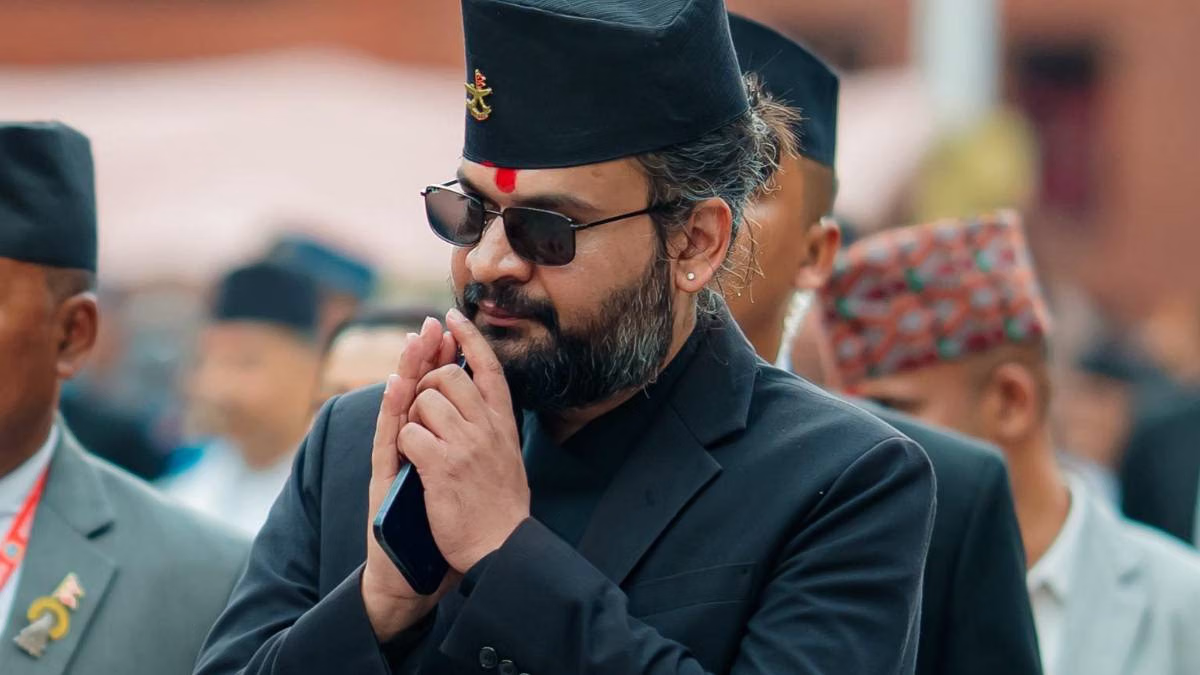
With this result, traditional parties such as the Nepali Congress, Communist Party of Nepal (Unified Marxist–Leninist), and Communist Party of Nepal (Maoist Centre) are facing strong political pressure, while the RSP appears to be only a few seats away from securing a two-thirds majority. Given the strong mandate received by the party, discussions have intensified regarding the leadership of the new government. Senior leader Balen Shah is widely expected to become the party’s parliamentary leader and the future prime minister.
Before the election, a seven-point agreement was reportedly reached between party president Rabi Lamichhane and Balen Shah concerning the party’s leadership structure and government formation. According to the agreement, Lamichhane would continue as party president while Shah would serve as parliamentary party leader and the prime ministerial candidate.
However, discussions have emerged regarding whether Shah can be formally nominated as the prime ministerial candidate under the party’s current statute without making amendments. Responding to these concerns, RSP Joint Secretary-General Bipin Kumar Acharya said that the party’s statute does not pose an obstacle to Shah’s leadership. He explained that the party is currently operating under a transitional statute, as its general convention has not yet taken place. According to Acharya, the parliamentary leader can still be selected through consensus among party members.
“There is no truth to the rumors circulating outside,” Acharya said. “Since the party convention has not yet been held, we have adopted a transitional statute. If the parliamentary party leader is chosen by consensus, the statute will not create any problem.”
He also noted that the party had originally established a democratic mechanism allowing members to elect the parliamentary party leader from among candidates contesting the federal elections. Acharya added that even if legal or procedural questions arise, the party’s Central Committee has the authority to resolve such issues under the statute.
According to him, the Central Committee meeting will likely be held after the final list of proportional representation members is confirmed. Party President Lamichhane is currently resting due to health concerns, and discussions on government formation will proceed once the party leadership convenes formally. Meanwhile, some legal experts have raised questions about possible conflicts between the RSP statute and the provisions of the Political Parties Act 2073.
The Act states that members of the federal parliament or provincial assemblies must elect their parliamentary party leader from among themselves following the direction of their respective parties. However, it also mentions that such elections must be conducted according to the party’s internal statute, which has created some legal ambiguity. The RSP statute includes provisions that allow party members to vote in selecting the parliamentary party leader before the federal election. The candidate receiving more than 50 percent plus one vote of the valid ballots becomes the parliamentary leader. If no candidate secures the required majority, a second round of voting between the top two candidates is conducted.
The statute also contains provisions for electing a parliamentary leader from among the elected representatives if the originally selected candidate fails to win the election or if the position becomes vacant for any reason.
Additionally, Article 80 of the statute grants the Central Committee the authority to resolve any difficulties that arise during the implementation of the party’s rules. Legal expert Yagyaman Neupane, who was involved in drafting the statute, stated that prior agreements within the party can still be implemented. According to him, if there is only one candidate for the leadership position, that individual can be elected unopposed. He emphasized that political agreements made before the election should be respected and implemented in accordance with democratic values.
As the RSP prepares to finalize its parliamentary leadership, attention is now focused on how the party will navigate internal procedures while forming a new government following its strong electoral performance.
React to this post
Related Articles