
Related Articles






Beyond the Missiles: The Real Reason Why Iran is Attacking Dubai’s Financial District | Nepinsights
Beyond the Missiles: The Real Reason Why Iran is Attacking Dubai’s Financial District
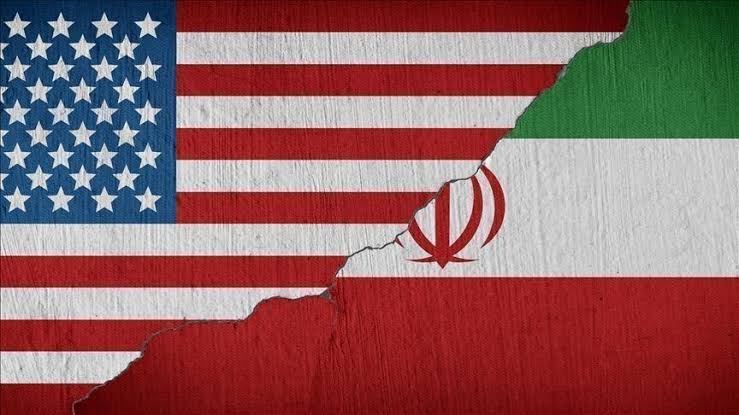
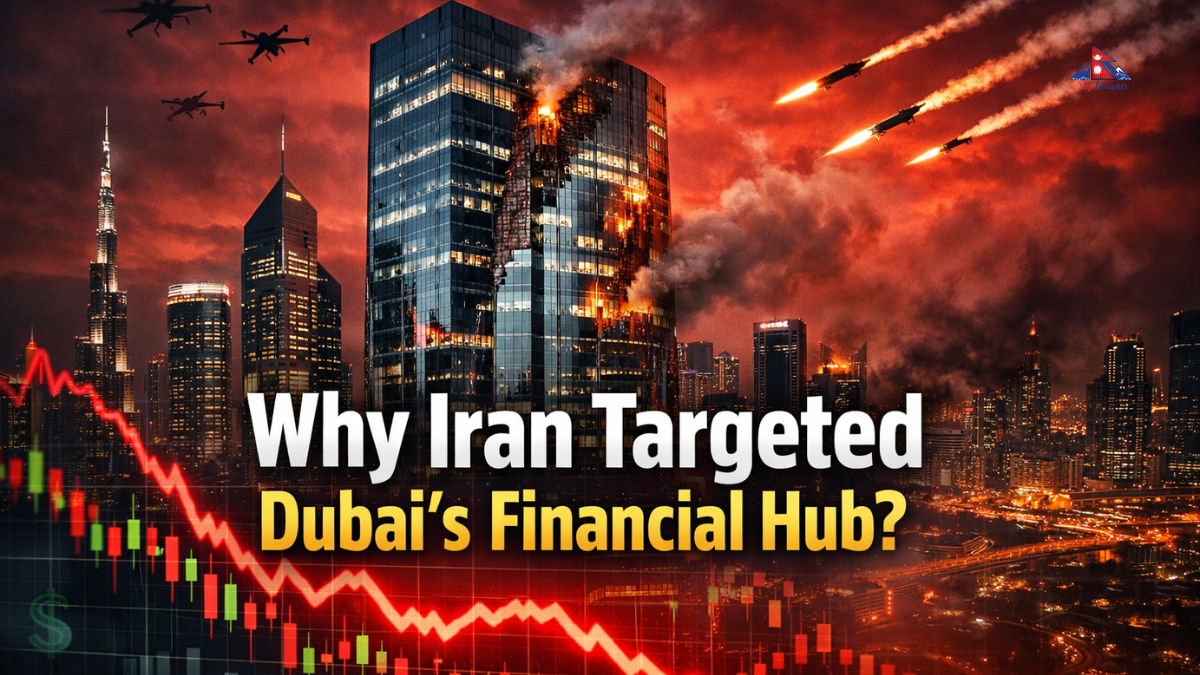
03/18/2026: Dubai, long regarded as an attraction of global investment and Middle Eastern stability, has recently faced strategic threats, raising the key question of why Iran is attacking Dubai's financial district and what this means for global markets. In this comprehensive guide, NepInsights delves into the causes, consequences, and prospects for the future in clear, accurate detail.
Introduction
The recent escalation of strikes and drone interceptions near Dubai's financial district has scared businesses and investors globally. Analysts contend that these events are not random, but rather have a precise strategic rationale, particularly in light of regional tensions and evolving military strategy.
To understand why Iran's strike on Dubai's financial center is significant, we must look beyond the headlines and consider deeper geopolitical, economic, and security aspects.
Understanding the Strategic Context
What Is Happening in Dubai and the Gulf?
Dubai's infrastructure, which includes the Dubai International Financial Centre (DIFC), large ports like Jebel Ali, and international airports, is critical not only for the UAE, but also for worldwide trade and banking. When security incidents occur in these areas, they have a significant impact on confidence, investment flows, and regional stability. This leads us to the central question: Why is Iran targeting areas like the Dubai finance district?
To address this, we look at several essential factors:
The Doctrine of Horizontal Escalation
One major justification for why Iran is attacking Dubai business area is the military concept known as horizontal escalation. Rather than attacking a nuclear power directly, governments may target friendly partners or economic hubs that Western countries rely on. This exerts pressure on influential partners while avoiding open conflict.
In this context, Dubai's financial and commercial infrastructure serves as a lever; by threatening key nodes, Iran sends a message not only militarily, but also economically and psychologically, to global powers.
Economic Logic: Confidence as a Weapon
Dubai’s Role in Global Finance
Dubai is more than just a city; it is a financial hub connecting the East and West. International banks, financial firms, and multinational corporations use it as an operating hub. Thousands of enterprises that channel funds between continents operate in the DIFC and other financial zones.
Impact of Targeted Disruption
When critical infrastructure is threatened:
- Insurance costs increase significantly.
- Investors consider price risk and may shift cash elsewhere.
- Corporate talent moves to perceived safer locations.
These effects are not coincidental; they are direct responses that undermine confidence and liquidity. Markets base risk evaluations on stability, and when stability is questioned, capital tends to flow quickly.
This market dynamic explains why Iran's strike on Dubai's financial district is a strategic choice: eroding financial confidence causes economic pressure without traditional battlefield engagement.
Political and Security Dimensions
UAE’s Evolving Alliance Position
Historically, the UAE has taken a neutral stance in numerous Middle East issues. In recent years, however, it has been more closely integrated with Western defense structures, hosting air bases and taking part in regional security cooperation.
This move alters the calculus for strategic actors such as Iran. Instead of focusing primarily on direct rivals, conflicts might spread to third-party governments, whose collaboration impacts regional equilibrium.
This geopolitical shift adds another element to the question of why Iran is striking Dubai's financial center - the purpose is not just destruction, but a realignment of strategic pressures.
Psychological Impact: Market Fear and Response
When an important global hub like Dubai faces repeated incidents:
- Investors integrate fear premiums into pricing.
- Global supply chains reassess exposure.
- Financial markets react in real time.
These effects ripple beyond the Gulf into global equity, FX, and commodity markets. Confidence is as vital as concrete infrastructure, and strategic disruption of confidence can be as powerful as kinetic attacks.
Debunking Misconceptions
This Is Not About Territorial Gain
Some tales incorrectly portray these actions as attempts to steal land or gain political power. That is not accurate. Strategic goal formulation in modern conflict is gradually shifting away from traditional territory conquest and toward economic and psychological impact.
It’s Not Random or Reactive
Security experts believe that this trend suggests determined planning rather than impulsive conduct. This strengthens the notion that the question of why Iran attacked Dubai's financial district must be answered through an examination of geopolitical rationale and economic motivations.
Potential Outcomes and What Comes Next
Regional De‑escalation or Escalation?
The future depends on diplomatic engagement, defense posture adjustments, and economic resilience. It’s possible that:
- Increased dialogue will reduce the intensity of incidents.
- UAE expands defense cooperation on its own terms.
- Alternative financial hubs emerge in parallel, reducing dependency on any single center.
FAQ: Why Iran Attacking Dubai Financial District
What triggered these recent attacks?
Recent tensions reflect broader regional conflicts and strategic shifts in alliances, where economic hubs become focal points of pressure.
Is Dubai safe for business now?
While incidents have triggered temporary disruptions, Dubai continues to operate with strong security measures in place.
How does this affect Nepal or South Asian markets?
Global disruptions in Gulf finance and trade can indirectly affect regional markets through commodity pricing and investor sentiment.
Will this lead to a larger war?
Analysts see it as part of a complex geopolitical puzzle. Escalation risks exist, but so do diplomatic pathways.
Conclusion
To understand why Iran attacked the Dubai financial sector, look beyond the headlines and consider strategic economic levers, military doctrine, and geopolitical pressure points. Dubai represents much more than just skyscrapers; it is a symbol of economic confidence and regional stability.
Disrupting such a core is about more than just physical harm; it's about shifting incentives, changing investment behavior, and creating pressure points that resonate around the world.
NepInsights will continue to watch the situation, provide expert updates, and analyze how regional tensions impact global finance.
Read More:
US Counter-Terrorism Director Resigns Over Iran War Stance
Elon Musk’s xAI Sued Over Grok AI Deepfake Content Scandal
React to this post
Related Articles