
Related Articles



US-Iran War Continues as New Sanctions Deepen Diplomatic and Economic Tensions
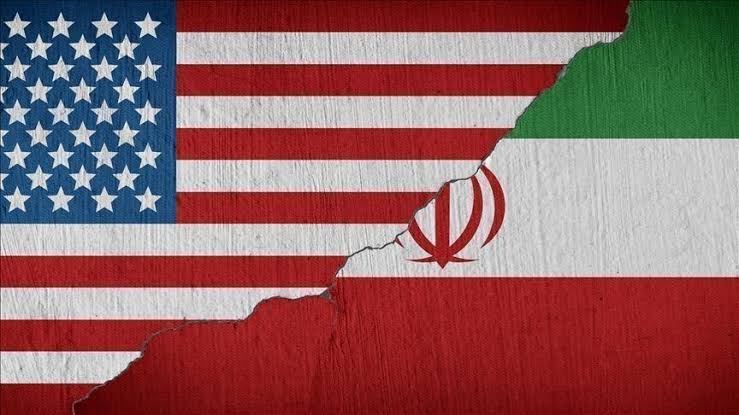
The US-Iran conflict shows no immediate signs of ending as Washington prepares to announce a new round of sanctions against Tehran, while tensions between the two countries continue to intensify on diplomatic, economic and military fronts.
The United States and Iran have continued exchanging strong statements ahead of the expected announcement of what US officials describe as some of the toughest sanctions yet. The measures could also increase pressure on countries that continue trading with Iran, particularly China, Tehran's largest trading partner.
The ongoing conflict has already created major economic and humanitarian consequences, while uncertainty surrounding the Strait of Hormuz is adding to concerns over global oil supplies.
US Prepares New Sanctions Against Iran
US Treasury Secretary Scott Bessent is expected to announce a new package of sanctions against Iran on Monday. Washington has also warned that countries and companies continuing to support Iran could face economic consequences.
The new measures are expected to target Iran's economy and increase pressure on Tehran to accept US demands.
Iran, however, has rejected the legitimacy of such measures. Iranian Foreign Ministry spokesman Ismail Baghali described the planned sanctions as an attempt by Washington to extend its jurisdiction over independent countries.
Iran has also argued that so-called secondary sanctions have no basis under international law.
China Could Face Increased Pressure
One of the biggest concerns surrounding the new US sanctions is their potential impact on China.
China remains Iran's most important trading partner and purchased more than 80 percent of Iran's exported oil in 2025, according to available data.
Any US attempt to restrict countries purchasing Iranian oil could therefore create a major dispute between Washington and Beijing.
China has criticized US pressure on Iran and has continued to emphasize diplomacy as the preferred way to resolve the conflict.
The situation could further complicate relations between the world's two largest economies while adding another layer to the wider US-Iran confrontation.
Trump Warns Countries Supporting Iran
US President Donald Trump has repeatedly warned that countries providing assistance to Iran could face economic consequences.
Asked about the possibility of reaching an agreement with Tehran, Trump said the US was monitoring developments. He also claimed that Iran wants a deal but has not yet agreed to what Washington considers the right terms.
Despite the pressure, several major US objectives announced at the beginning of the conflict reportedly remain unresolved.
Questions also remain over the condition of Iran's nuclear program. International inspectors have been unable to access Iran since 2025, making it difficult to independently assess the current status of the country's nuclear activities.
Strait of Hormuz Becomes a Major Flashpoint
The Strait of Hormuz has emerged as one of the most critical points in the conflict.
Iran has warned that oil tankers attempting to pass through the strategic waterway without permission could be targeted. As a result, commercial maritime traffic through the strait has fallen sharply.
Ship-tracking data reportedly showed that only four commercial vessels passed through the Strait of Hormuz on Thursday, with none being large crude oil tankers or liquefied natural gas carriers.
The situation is particularly significant for global energy markets because Hormuz is one of the world's most important oil transportation routes.
US Energy Secretary Chris Wright said that approximately 8 million barrels of oil per day had been transported through the strait over the previous seven days with US military assistance.
Before the war, more than 20 million barrels of oil per day reportedly passed through the waterway, equivalent to around one-fifth of global daily oil consumption.
Any prolonged disruption could therefore have significant consequences for global oil prices, energy security and inflation.
Iran's Military Capability Has Been Weakened
US military operations have reportedly caused significant damage to parts of Iran's economy and weakened elements of its navy and air force.
However, Iran continues to possess substantial missile and drone capabilities, allowing it to threaten regional targets and potentially disrupt maritime traffic.
Major General Ali Abdollahi, Chief of Staff of the Iranian Armed Forces, warned that any new threat would receive what he described as a severe response.
Despite the military rhetoric, Iranian President Masoud Pezeshkian has also emphasized the importance of diplomacy and suggested that ending the conflict through negotiations could be preferable.
This combination of military warnings and calls for diplomacy reflects the difficult position facing Iran as the war continues.
Economic Pressure Mounts Inside Iran
The economic consequences of the conflict are becoming increasingly difficult for Iran to ignore.
Iranian Parliament Speaker and chief negotiator Mohammad Baqer Ghalibaf has acknowledged concerns over the country's economic situation.
He stressed that military strength alone cannot guarantee a country's survival if its population lacks access to food, economic activity weakens and national production and growth decline.
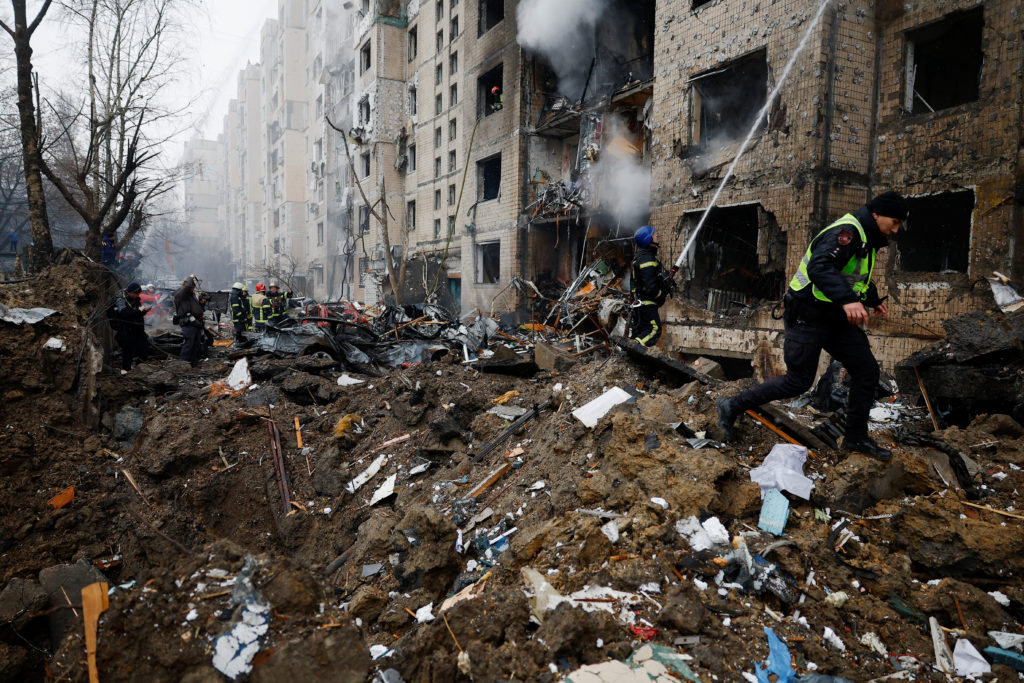
The war has already resulted in significant human losses. Thousands of people have reportedly been killed during the conflict, including 168 schoolchildren reportedly killed on the first day of the war.
The United States has also reported significant military casualties, with more than 750 personnel injured and 18 killed.
What Happens Next?
Although direct military confrontations have reportedly decreased at times, the broader political and economic conflict between the United States and Iran remains highly volatile.
Several developments could determine the next phase of the crisis:
- The new US sanctions expected on Monday
- China's response to increased pressure over Iranian oil
- The future of oil shipments through the Strait of Hormuz
- Iran's remaining missile and drone capabilities
- The possibility of renewed diplomatic negotiations
- The humanitarian and economic situation inside Iran
For global markets, the Strait of Hormuz will remain particularly important. Any further disruption to oil and gas transportation could affect energy prices and economies far beyond the Middle East.
Conclusion
The US-Iran war has entered a complicated phase in which military confrontation is increasingly intertwined with sanctions, diplomacy, energy security and international trade.
While Washington continues to increase economic pressure on Tehran, Iran has shown no indication of simply accepting US demands. China's role could become increasingly important as Washington seeks to restrict Iran's oil exports.
With new sanctions expected, uncertainty surrounding the Strait of Hormuz and the possibility of renewed diplomatic efforts, the coming days could prove crucial in determining the future direction of the conflict.
React to this post
Related Articles