
Related Articles



Nepal Election 2026: When Will the Results Be Announced?
When will we know the final results?
Nepal held an important general election on March 5, 2026, where citizens voted to elect a new government. This election is historic because it is the first national vote after the youth-led protests of September 2025 that forced the previous government to resign.
After the protests and political crisis, an interim government led by former Chief Justice Sushila Karki was formed. The temporary government promised to hold fresh elections within six months and return power to an elected government.
Now millions of Nepalis have already cast their votes. The next big question for everyone is simple:
When Will Nepal Election Results Be Announced?
The Election Commission of Nepal has announced that the results of 165 directly elected seats could be released within 24 hours after counting begins.
However, the process is not always quick.
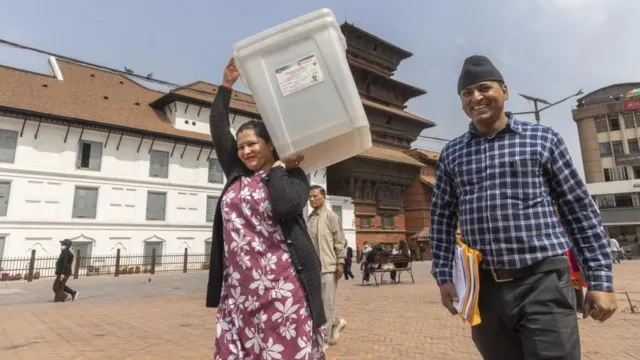
Nepal is a country with mountains, hills, and remote villages, and this geography makes election logistics difficult. Ballot boxes must first be collected from thousands of polling stations across the country.
Because of this, officials say the final results may take a few days.
Election officials are aiming to complete vote counting by March 9, 2026.
In the previous 2022 election, it took almost two weeks to announce all the results.
Why Vote Counting Takes Time in Nepal
Nepal’s unique geography creates many challenges during elections.
More than 80% of the country is mountainous, and many polling stations are located in remote villages.
This means ballot boxes must be transported in different ways such as:
-
Carried by hand through mountain trails
-
Transported by vehicles where roads exist
-
Airlifted by helicopters or planes from remote regions
Flights also cannot operate in some areas after dark, which means collection sometimes starts the next morning.
Weather conditions like snowfall and rain can also delay the process.
For example, in Mustang district, officials deployed 20 election workers just to serve a small village with only four registered voters.
This shows how challenging elections can be in Nepal.
How the Nepal Election System Works
Nearly 19 million voters participated in the 2026 election. Among them were almost one million first-time voters, many from Gen Z youth groups.
Nepal elects 275 members of parliament using two different voting systems.
1. Direct Election System (First-Past-The-Post)
-
165 seats are decided this way
-
The candidate with the highest votes wins the seat
2. Proportional Representation System
-
110 seats are allocated to political parties
-
Seats are distributed based on the percentage of votes each party receives
Because of this system, no single party usually wins a majority, and coalition governments are common.
Key Candidates in the Nepal Election

Many political leaders are competing in the election, but some contests are receiving special attention.
One of the most watched candidates is Balendra Shah (Balen), the 35-year-old former mayor of Kathmandu.
Balen represents the Rastriya Swatantra Party (RSP) and is seen as a youth-driven candidate promising political change.
He is competing against former Prime Minister KP Sharma Oli, a powerful leader from the Communist Party of Nepal (UML).
This contest has become one of the most talked-about races in the country.
Other major political players include:
-
Nepali Congress
-
Nepali Communist Party (Maoist Center) led by Prachanda
Political analysts are also watching Kathmandu Valley’s 15 seats, which often show how urban voters are thinking.
Main Issues in the 2026 Nepal Election
The election comes after large anti-corruption protests in 2025, where many young Nepalis demanded change.
During those protests, 77 people were killed, including several demonstrators.
Public anger was driven by several major issues:
-
Corruption in government
-
Unemployment among youth
-
Economic slowdown
-
Social inequality
-
Lack of opportunities inside Nepal
Many political parties have promised reforms such as:
-
Strong anti-corruption investigations
-
Better governance
-
More jobs inside Nepal
These issues have become central topics of the 2026 election campaign.
Why This Election Matters for Nepal
This election is important not only for Nepal’s domestic politics but also for international relations.
Major global powers are watching the election closely.
Countries like India, China, and the United States have strong interests in Nepal’s future government.
Political decisions made by the next government could influence:
-
Regional diplomacy
-
Economic partnerships
-
Infrastructure development projects
-
International investments
For this reason, the 2026 election has both national and global importance.
Final Thoughts
Nepal’s 2026 general election marks a significant moment in the country’s democratic journey. Millions of citizens have participated in shaping the future of the nation.
While counting votes may take several days due to the country’s challenging geography, the Election Commission aims to complete the process by March 9.
Until then, Nepalis across the country are waiting with excitement to see which leaders will form the next government.
NepInsights will continue providing reliable election updates and important news for Nepali citizens in real time.
React to this post
Related Articles