

Related Articles








Phulpati 2083: Significance, Auspicious Time, Traditions and Kalratri Puja in Nepal
Phulpati, one of the most significant observances of Dashain, is being celebrated across Nepal with traditional rituals, religious worship and cultural ceremonies dedicated to Goddess Durga. Observed on the seventh day of Navaratri, Phulpati symbolizes divine power, prosperity, purity and the victory of good over evil.
The festival holds a special place in Nepali Hindu culture, bringing together religious devotion, nature worship and centuries-old traditions. On this occasion, households prepare sacred offerings, worship the nine forms of Goddess Durga and seek blessings for health, happiness and prosperity.
According to the Nepal Panchanga Nirnayak Development Committee, the auspicious time for bringing Phulpati in 2083 BS is 7:37 AM.
What Is Phulpati? Understanding Its Religious Significance
Phulpati is an important ritual observed during Dashain, particularly on the seventh day of Navaratri. The word is associated with sacred flowers, leaves and other botanical offerings used in the worship of Goddess Durga.
In Nepali Hindu tradition, Phulpati represents the divine energy of the goddess and is associated with prosperity, well-being and auspicious beginnings. The ritual also reflects the close relationship between religious practices and nature.
Families bring sacred leaves and plants into their homes and worship them as part of the rituals dedicated to Navadurga, the nine manifestations of Goddess Durga.
Although the exact plants and methods of worship can vary according to local customs and religious traditions, the central purpose remains the same: to honor the goddess and seek her blessings during Dashain.
Nine Sacred Plants Associated With Phulpati
Traditional accounts associate Phulpati with nine types of sacred plants or leaves, collectively connected with the worship of Navadurga.
These are commonly identified as:
-
Banana
-
Turmeric
-
Jayanti
-
Bel
-
Pomegranate
-
Ashoka
-
Mane
-
Karkalo
-
Paddy
The list and terminology may differ across regional traditions and ritual texts. The plants are incorporated into religious offerings according to established customs.
Their inclusion reflects the importance of nature in Hindu worship. Plants are regarded not only as sources of food and medicine but also as symbols of fertility, renewal, abundance and the sustaining power of life.
Through the Phulpati ritual, devotees express gratitude for nature's resources and pray for prosperity and protection for their families.
Phulpati Ceremony at Hanuman Dhoka Durbar
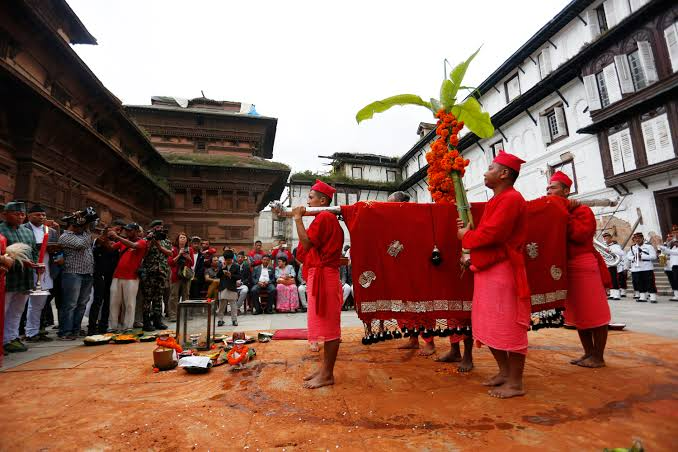
One of the most prominent Phulpati traditions in Nepal is the ceremonial arrival of Phulpati from Gorkha to Kathmandu.
According to tradition, the sacred offerings are brought to Hanuman Dhoka Durbar Square and ceremonially installed in the Dashain Ghar.
The historic ceremony connects Nepal's cultural heritage with the religious significance of Dashain. It traditionally involves formal observances, members of the Nepali Army, cultural groups and the public.
The ceremony is an important part of Kathmandu's Dashain celebrations, reflecting the historical relationship between religious customs, royal traditions and the country's cultural identity.
Phulpati is therefore more than the arrival of sacred leaves and flowers. It is a celebration of Nepal's living heritage, community participation and enduring religious traditions.
Worship of Goddess Kalratri on the Seventh Day of Navaratri
The seventh day of Navaratri is dedicated to Goddess Kalratri, the seventh manifestation of Navadurga.
Goddess Kalratri is traditionally depicted with a dark complexion, three eyes and four arms. She is associated with a donkey as her mount and is described in religious traditions as carrying a sword and other symbolic objects while displaying protective and blessing gestures.
Her fierce appearance represents the destruction of evil, ignorance and negative forces. Despite her fearsome form, Kalratri is regarded as a benevolent goddess who protects devotees and grants auspicious blessings.
She is also associated with courage, fearlessness and the strength to overcome difficulties.
According to Hindu belief, worshipping Goddess Kalratri helps devotees overcome fear, develop inner strength and seek protection from harmful influences. Her worship emphasizes the idea that divine power can overcome even the most threatening challenges.
Religious Significance of Kalratri Puja
Devotees worship Goddess Kalratri with prayers, offerings, lamps, fruits and other items prescribed by their family or religious traditions.
The worship generally begins with the preparation of the sacred space and the invocation of Lord Ganesha, followed by the prescribed rituals dedicated to the goddess.
Jaggery is traditionally offered to Goddess Kalratri in some observances. Devotees believe that sincere worship brings blessings, removes obstacles and supports prosperity.
The religious significance of Kalratri Puja extends beyond material wishes. Her fierce form reminds devotees to confront fear, remain courageous during difficult times and overcome negative tendencies.
On the same day, Saraswati, the goddess associated with knowledge, learning, music and the arts, may also be worshipped according to family and regional traditions.
Saptami Puja and the Worship of Navapatrika
Saptami Puja is another important component of the seventh day of Navaratri.
Traditional rituals may include the worship of Navapatrika, sacred plant offerings associated with the goddess, along with ceremonial worship of a Bilva tree in traditions that prescribe it.
The worship involves prayers, offerings and the recitation of sacred verses dedicated to Goddess Durga.
A traditional prayer begins with the words:
Mahiṣaghni mahāmāye cāmuṇḍe muṇḍamālini.
The prayer seeks blessings for longevity, health, prosperity and well-being. Devotees also offer prayers for success, family happiness and the fulfillment of righteous wishes.
The exact sequence of Saptami Puja depends on the relevant ritual tradition, regional customs and the guidance followed by the family or priest.
Durga Stuti: Prayers Dedicated to Goddess Durga
Durga Stuti is a devotional hymn praising Goddess Durga as the protector of the universe, the source of auspiciousness and the divine mother.
One traditional verse begins:
Durgāṁ śivāṁ śāntikarīṁ brahmāṇīṁ brahmaṇaḥ priyām.
Sarvalokapraṇetrīṁ ca praṇamāmi sadāśivām.
The hymn praises the goddess as auspicious, peaceful, pure and the mother of the universe. It expresses reverence for her protective power and her role in overcoming suffering and restoring balance.
Devotees recite or listen to such hymns as part of their religious observances, seeking spiritual peace, protection and blessings.
Durga Stuti also reflects a central theme of Dashain: the belief that divine strength protects righteousness and helps overcome destructive forces.
How Phulpati Is Celebrated in Nepali Households
Phulpati is observed through a range of religious and family traditions across Nepal.
Households may prepare a sacred place for worship, bring in prescribed plants and leaves, light oil lamps and offer flowers, fruits and other devotional items to Goddess Durga.
Families often continue their Navaratri worship and prepare for the main Dashain celebrations that follow.
In many communities, Phulpati also marks the approach of the most important days of Dashain, including Maha Ashtami, Maha Navami and Vijaya Dashami.
The rituals may differ among communities, but they share common themes of devotion, family unity, gratitude and the hope for a prosperous future.
Phulpati Reflects Nepal's Cultural and Religious Heritage
Phulpati remains an important expression of Nepal's religious and cultural identity. Its traditions connect sacred plant worship, devotion to Goddess Durga and historical ceremonies that have been passed down through generations.
The observance also demonstrates the importance of nature in Hindu religious practices, with plants and leaves serving as symbols of life, abundance and renewal.
As families and communities celebrate Phulpati, the festival provides an opportunity to preserve cultural traditions, strengthen relationships and reflect on the values of courage, faith and harmony.
Phulpati is not simply a ritual involving flowers and leaves. It is a meaningful celebration of divine power, nature, prosperity and Nepal's distinctive Dashain heritage.
React to this post
Related Articles