
Related Articles




Foreign Teams Join Search as Trapped Workers Remain Out of Reach After a Week
Introduction
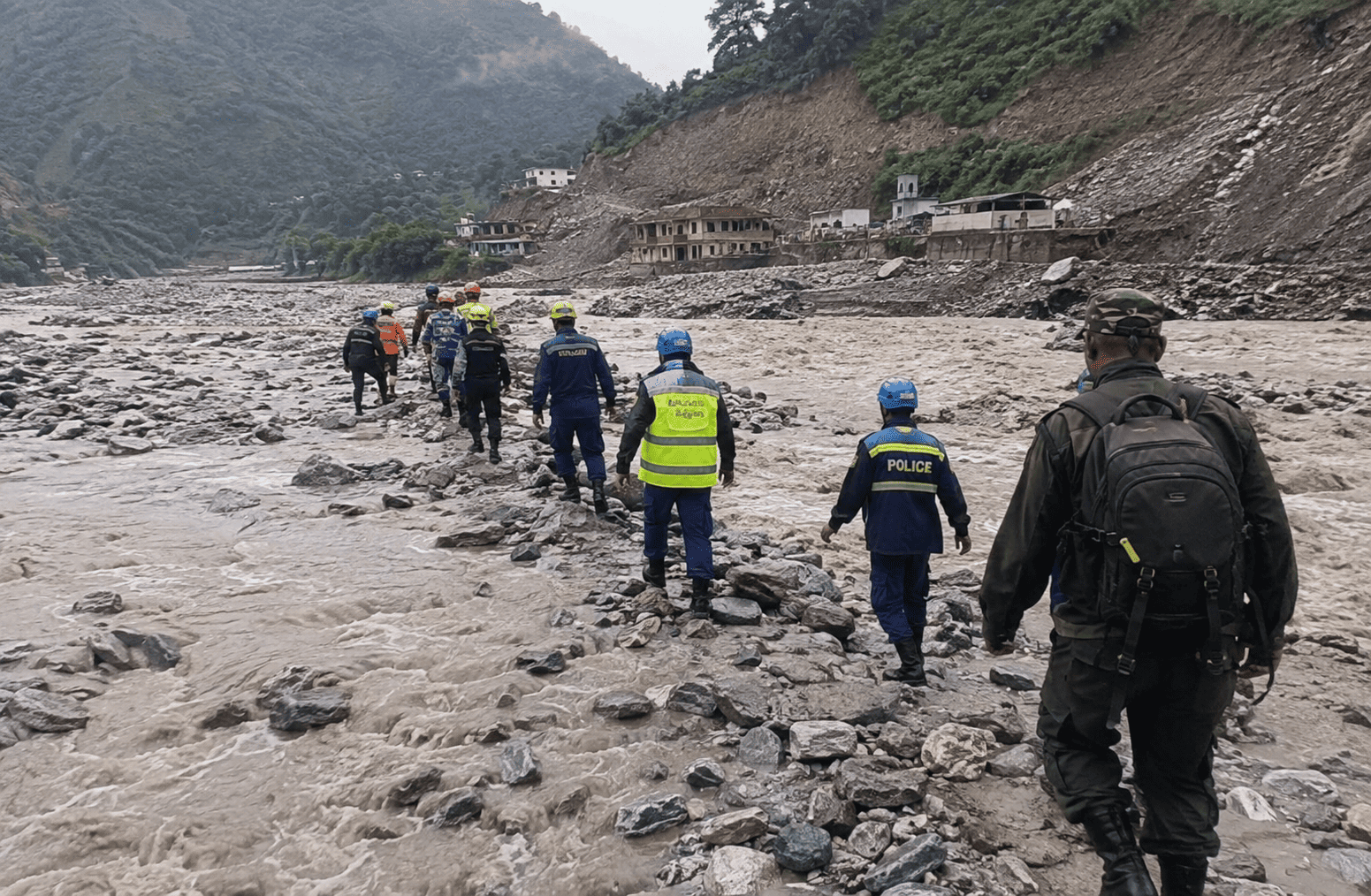
As the week comes to an end following the flash flooding that took place in the Bhotekoshi-Trishuli valley caused by a glacier collapse, the Rasuwa relief effort enters into a tougher and more difficult stage. The Nepal Army, the Armed Police Force, and the Nepal Police are now supported by specialized rescue missions from China, India, and South Korea trying to find people trapped in hydropower tunnel sites in Rasuwa and Nuwakot district.
In this report, we go over the events that have taken place, why the search has been difficult, where countries have helped from, and how the rescue mission works. We also discuss realistically why some of these missions will not end up the way everyone is hoping them to, based on what the reality of the situation is.
Quick answer: Foreign rescuers from China, India, and South Korea, together with the Nepali Army, are currently performing rescue missions for Trishuli 3A, Trishuli 3B, and Chilime hydropower project tunnels in Rasuwa as of September 1, 2026. Currently, there are about 198 people who are missing from the Trishuli 3B tunnel alone, but no rescue team has yet made contact with anyone in the tunnels due to mud, water, and debris. It is said that the 72-hour period immediately following a tunnel collapse is when the best chances of rescue are; this particular mission is now in its seventh day.
What Happened in Rasuwa ?
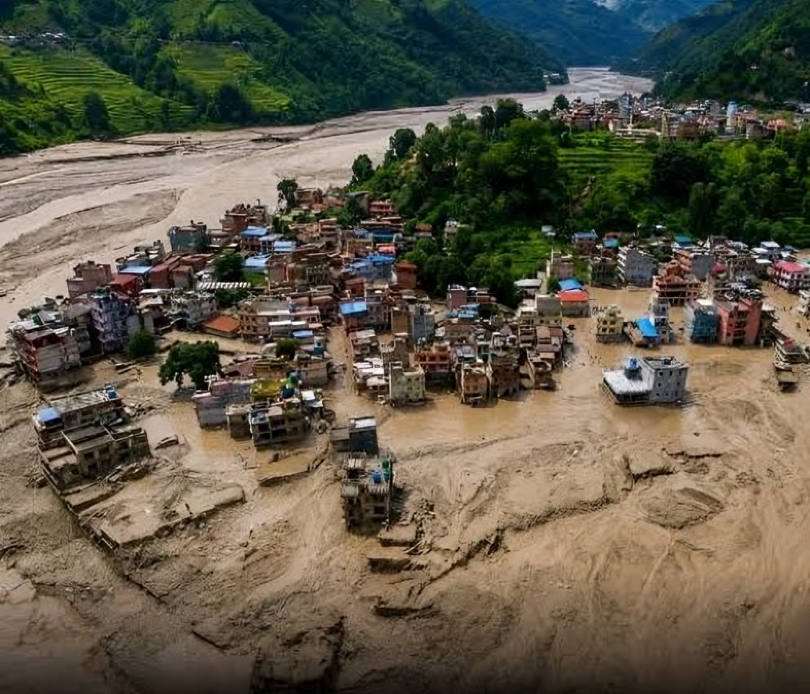
This disaster started on August 26, 2026, when a collapse of a glacier at the Nepal – China border area caused a tremendous flash flood in the Bhotekoshi and Trishuli river basins. The flood devastated the districts of Rasuwa and Nuwakot causing destruction of bridges, roads and hydropower infrastructures, carrying debris and mud in to the tunneling systems at various hydropower projects such as Trishuli 3A, Trishuli 3B, Rasuwagadhi, and Chilime.
As per the official report from Nepal's national disaster authority, by the morning of September 1, the death toll across the nation had reached 987 while the number of missing persons remained at 3,916. When the figure of 16 deaths and 546 missing people across the border at Tibet Autonomous Region were added to the above figures the death toll exceeded 1,000. In Rasuwa district which was the origin of the flood, there have been relatively fewer number of recovered bodies (27) due to the power of the flood carrying away bodies downstream to other districts such as Chitwan and Nawalparasi.
Among the thousands of persons missing, officials report that 583 of these are foreigners from 38 different countries, most of whom were pilgrims taking the Rasuwagadhi path to reach Kailash Mansarovar in Tibet. On the other hand, 639 missing persons are those involved in hydropower projects where workers were inside the tunnels at the time of the floods.

Why the Trapped Workers Are Still Out of Reach After a Week ?
Quick answer: Rescue teams have been unable to reach workers trapped inside the tunnels because the passages are packed with thick mud, standing floodwater, and collapsed debris, and repeated rainfall keeps refilling areas that crews have just cleared.
At the Trishuli 3B hydropower project, project officials say 198 employees and workers remain out of contact following the flood. A larger operation involving 200 to 300 personnel and several excavators working at once is now considered necessary to make real progress, according to rescue coordinators quoted in local reporting.
Search and rescue professionals generally treat the first 72 hours after a tunnel accident as the most critical window for finding survivors. In this case, that window closed days ago, and crews still had not fully reached the areas where people are believed to be trapped as of September 1. That does not mean rescue efforts have stopped it means the operation has shifted from a fast response to a slower, engineering-heavy clearance effort.
Main obstacles rescue teams are facing
- Mud and debris blockages : Tunnels at sites like Trishuli 3A and 3B were swamped with thick mud that hardens and resists standard excavation.
- Standing and rising water : Overnight rain and rising river levels have repeatedly refilled excavated sections, undoing hours of progress.
- Structural risk : Tunnel walls and access shafts are unstable after the flood, making entry dangerous even for trained crews.
- Limited heavy equipment on-site : Drilling machines, excavators, and hydraulic cutters have had to be brought in gradually due to damaged roads and difficult terrain.
- Weather delays : Persistent monsoon-season rain has interrupted both helicopter access and ground operations multiple times since August 26.
Which Foreign Rescue Teams Have Joined the Operation ?
Nepal formally requested international technical assistance once it became clear that domestic teams alone could not safely open the flooded tunnels. Several countries have responded.
China
China has sent multiple waves of support. A helicopter carrying four People's Liberation Army tunnel rescue specialists flew directly from the Kerung border crossing and landed near the affected hydropower project on August 29. Nepal then brought in a separate six-member Chinese technical expert team to work with Nepali Army engineers, specifically to assess whether opening the Trishuli 3B tunnel entrance is even feasible before committing to a full rescue push. China has also pledged $2 million in cash assistance and has been preparing additional relief cargo flights.
India
An Indian rescue team has also reached the Trishuli area to support the operation, working alongside Nepali and Chinese personnel on technical reconnaissance of the affected sites.
South Korea
South Korea deployed a rapid response team from its National Fire Agency specifically to search for nine missing South Korean nationals six employees of Doosan Enerbility and three from Korea South-East Power who were working at a hydropower construction site in Rasuwa. The team flew in by helicopter after receiving flight clearance that had been delayed by poor weather, and coordinated with Nepal's military, which had already run an aerial search based on coordinates the Korean Embassy supplied.
Nepal Mountaineering Association (NMA)
Beyond government-to-government support, Nepal's own mountaineering community has been mobilized. The NMA deployed a rescue team, led by rescue in-charge Bikram Karki, to Tunnel Nos. 1, 2, and 3 at the Hakku-216 site but the team could not proceed because conditions inside were judged extremely dangerous. The NMA has since called publicly for a specialized operation equipped with high-capacity water pumps, confined-space rescue gear, breathing apparatus, and experienced caving and canyoning rescuers, saying up to 300–400 workers may be trapped there.

Site-by-Site Rescue Status
|
Site |
Status as of Sept 1, 2026 |
Key Challenge |
|
Trishuli 3B |
198 workers out of contact; Chinese, Nepali Army teams assessing feasibility |
Mud-blocked entrance, needs 200–300 personnel |
|
Trishuli 3A |
Army drilled into upper part of tunnel, began pumping air and sending camera |
Overnight rain refilled excavation area |
|
Chilime Hydropower Project |
Technical workers still awaiting rescue |
Access route still blocked |
|
Hakku-216 (tunnels 1–3) |
NMA team blocked from entry; estimated 300–400 workers may be trapped |
Extremely dangerous mud and water conditions |
|
Rasuwagadhi corridor |
Focus of missing pilgrims and foreign nationals search |
Main overland gateway to Tibet, badly damaged |
Note: these figures come from statements by project officials, the Nepal Army, and disaster authorities as reported through September 1, 2026, and are likely to change as the operation continues.
How Tunnel Rescue Operations Actually Work ?
For readers unfamiliar with technical rescue work, it helps to understand what teams are actually doing on-site, step by step.
- Technical reconnaissance : Specialists first assess whether a rescue attempt is even physically safe, checking tunnel structural integrity, water levels, and mud consistency.
- Access clearance : Excavators and drilling machines remove debris and mud from the tunnel entrance, often in stages rather than all at once.
- Air and camera insertion : Once a partial opening exists, crews pump air into the space and insert cameras to check for survivors and confirm conditions before anyone enters.
- Water management : Pumps are used to control flooding inside the tunnel, since rain and river levels can undo hours of clearance work overnight.
- Controlled entry : Only once conditions are judged survivable do rescue personnel physically enter, usually roped and in confined-space gear.
- Extraction and medical triage : Anyone found is stabilized on-site before being moved to receive further medical care.
This is why progress can look slow from the outside. Each stage has to be repeated safely, sometimes multiple times, if weather or structural conditions change.

Why This Rescue Is So Difficult ?
It's important to be direct about the constraints rescue teams are working under, rather than suggesting the outcome is guaranteed either way.
Factors working against the rescue
- A full week has passed since the flood, well beyond the 72-hour window generally considered most critical for finding survivors.
- Tunnels are confined spaces, which magnify the risks of mud collapse, poor air quality, and flooding compared with open-ground search operations.
- Continued monsoon rainfall keeps adding water to already-flooded sections.
- Road damage has slowed the delivery of heavy machinery to some sites.
Factors that still support the effort
- Some tunnel sections may have pockets of trapped air or partially enclosed dry areas, which is part of why teams are pumping air and inserting cameras before assuming the worst.
- International expertise particularly China's tunnel rescue specialists and India's technical team brings equipment and experience Nepal's domestic teams may not have readily available.
- Authorities have signaled they are scaling up personnel and equipment (200–300 workers and multiple excavators) rather than winding the operation down.
What Families and the Public Can Do ?
If you have a family member connected to the affected hydropower sites, or you're trying to track updates:
- Stay in contact with your embassy if the missing person is a foreign national — South Korea's coordination through its embassy is a useful example of how this channel works.
- Follow updates directly from Nepal's disaster authority and the Nepali Army rather than relying solely on secondhand social media reports, since site conditions change daily.
- Reach out to established humanitarian organizations operating in Rasuwa, Nuwakot, and Dhading if you want to support relief efforts rather than the rescue operation itself, since these are often separate response tracks.
Key Takeaways
A week after the August 26 glacier-collapse flood, rescue teams still have not fully reached workers believed trapped inside Rasuwa's hydropower tunnels.
- China, India, and South Korea have all sent specialist personnel to support Nepal's Army-led operation.
- Roughly 198 workers remain out of contact at Trishuli 3B alone; NMA estimates suggest 300–400 more may be trapped at the Hakku-216 site.
- Mud, standing water, and structural instability worsened by continued rain are the main obstacles slowing tunnel access.
- Nepal's nationwide disaster toll stood at 987 confirmed deaths and 3,916 missing as of September 1, 2026, with the combined Nepal-Tibet toll surpassing 1,000.
- Authorities say a larger operation, with 200–300 personnel and multiple excavators, is now needed to make faster progress.
- The situation is still developing, and rescue figures are being updated daily by Nepal's disaster authority.
Frequently Asked Questions
- What caused the Rasuwa flood and tunnel disaster?
A glacier collapse near the Nepal–China border on August 26, 2026, triggered flash floods down the Bhotekoshi and Trishuli river systems, sweeping mud and debris into hydropower tunnels in Rasuwa and Nuwakot districts. - How many workers are still trapped in the Rasuwa tunnels?
Officials say around 198 workers remain out of contact at the Trishuli 3B project alone, while the Nepal Mountaineering Association estimates 300 to 400 more may be trapped at the Hakku-216 site. These figures are still being confirmed and may change. - Which countries have sent rescue teams to Rasuwa?
China, India, and South Korea have all sent specialist personnel. China has sent both a rapid tunnel-rescue team and a separate technical expert team; South Korea's National Fire Agency deployed a team focused on nine missing South Korean workers. - Why hasn't the rescue team reached the trapped workers yet?
Tunnels are blocked with thick mud and standing water, and continued rainfall keeps refilling sections that crews have already cleared, on top of structural instability that makes entry dangerous. - Is it still possible to find survivors after a week?
The 72-hour mark is generally considered the most critical window for tunnel rescues, and that window has passed. However, rescue teams have not ruled out survivors, particularly in sections with trapped air pockets, which is why air pumping and camera checks are still being carried out. - What is Nepal's overall flood death toll as of September 1, 2026?
Nepal's disaster authority reported 987 confirmed deaths and 3,916 missing nationwide as of the morning of September 1, 2026. Combined with Tibet's toll of 16 dead and 546 missing, the total disaster figure has passed 1,000 deaths. - How can I get reliable updates on the Rasuwa rescue operation?
Follow official statements from Nepal's disaster authority and the Nepal Army, along with established news outlets covering the story directly, since site conditions and casualty figures are being updated daily.
Conclusion
The Rasuwa disaster relief mission demonstrates the increased difficulty in disaster relief via tunnels, relative to those done on open ground. Despite one week having elapsed, relief workers have yet to be accessible, but the presence of Chinese, Indian, and South Korean experts, along with increased efforts by the Nepalese Army, clearly indicates that there will be no end to this matter anytime soon. For those who have been monitoring this incident, the best thing to do would be to stick to information from Nepal's official disaster management agency and reputable sources of news.
React to this post
Related Articles