
Related Articles


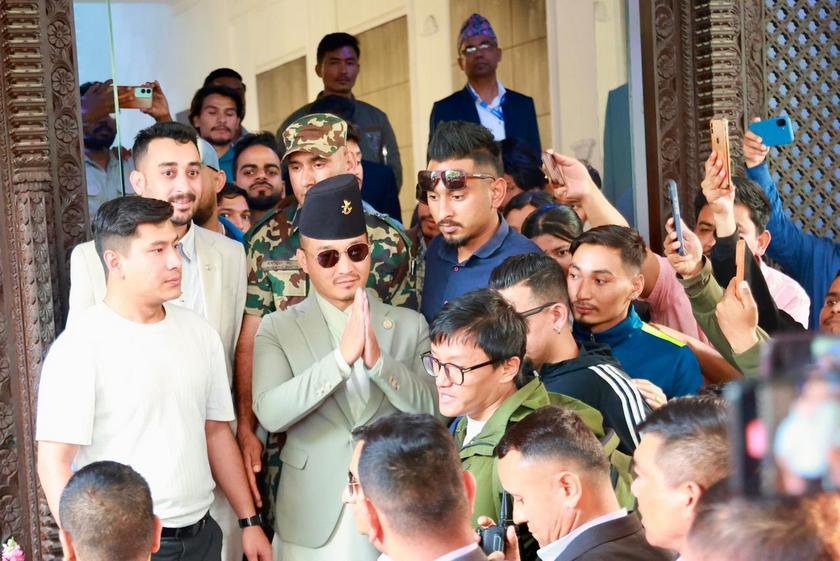
Swornim Wagle Faces Growing Pressure to Deliver Promised Tax Reforms as Budget Nears
As Nepal prepares for the upcoming national budget announcement, Finance Minister Swornim Wagle is under growing public and political pressure to fulfill the ambitious tax reform promises made during the election campaign. Two of his most talked-about commitments reducing the heavy taxes imposed on vehicles and increasing personal income tax relief are now becoming increasingly difficult to implement due to the country’s weak revenue performance and ongoing economic challenges.
During the election campaign, Swornim Wagle gained widespread attention for presenting himself as a reform-oriented economist who would modernize Nepal’s economic policies and reduce the financial burden on ordinary citizens. Among his major promises was a commitment to lower the high vehicle taxes that many business owners, middle-class families, and automobile dealers have long criticized as excessive. He had also pledged to increase the personal income tax exemption threshold, allowing salaried individuals and professionals to retain more of their earnings.
However, as the government moves closer to finalizing the national budget, economic realities are making those promises harder to achieve.
Nepal’s revenue collection has remained weaker than expected in recent months. Customs revenue, one of the country’s largest sources of income, has struggled due to lower imports and reduced economic activity. The government had hoped to expand the tax base and improve collection efficiency, but those efforts have not produced the expected results. As a result, the Finance Ministry is now facing a difficult balancing act between maintaining government spending and introducing tax cuts.
Economic analysts warn that reducing vehicle taxes could significantly affect government revenue at a time when Nepal is already dealing with budget deficits, slow economic growth, and rising pressure to increase public spending on infrastructure, employment generation, and social welfare programs. Vehicle imports contribute a major portion of customs and excise duties, making them a critical source of government income.
Similarly, increasing income tax relief for citizens would reduce direct tax revenue, adding further pressure to an already strained fiscal system. While such reforms may provide relief to middle-class taxpayers and encourage economic activity, experts say the government must first ensure stable revenue sources before implementing large-scale tax reductions.
Political pressure is also increasing from both supporters and critics. Many voters who supported Swornim Wagle during the election are now expecting visible action on the commitments that were heavily promoted during campaign speeches and public discussions. Opposition leaders have also started questioning whether the promises were realistic from the beginning or merely election strategies designed to attract frustrated taxpayers.
Business communities and automobile dealers are closely watching the upcoming budget announcement. Several industry representatives argue that Nepal’s current vehicle tax structure discourages investment and places unnecessary financial pressure on consumers. They believe that lowering taxes could increase vehicle sales, support the automobile industry, and ultimately stimulate economic activity. However, others fear that sudden tax reductions without proper financial planning could widen the fiscal deficit.
Despite the growing criticism, supporters of Finance Minister Swornim Wagle argue that structural reforms take time and that the country’s current economic conditions are more complicated than anticipated during the election campaign. Global economic uncertainty, lower remittance growth concerns, and slower domestic market activity have all contributed to the government’s financial difficulties.
The upcoming budget will therefore become a major test of Swornim Wagle’s economic leadership and political credibility. Citizens, businesses, and political observers will closely examine whether the government introduces even partial tax reforms or delays them for future fiscal years.
For many Nepalis, the issue goes beyond taxes alone. It reflects broader concerns about economic management, political accountability, and whether elected leaders can realistically deliver the promises they make during elections.
As budget day approaches, expectations continue to rise and so does the pressure on Finance Minister Swornim Wagle to prove that his vision for economic reform can move from campaign speeches to real government policy.
React to this post
Related Articles