Related Articles

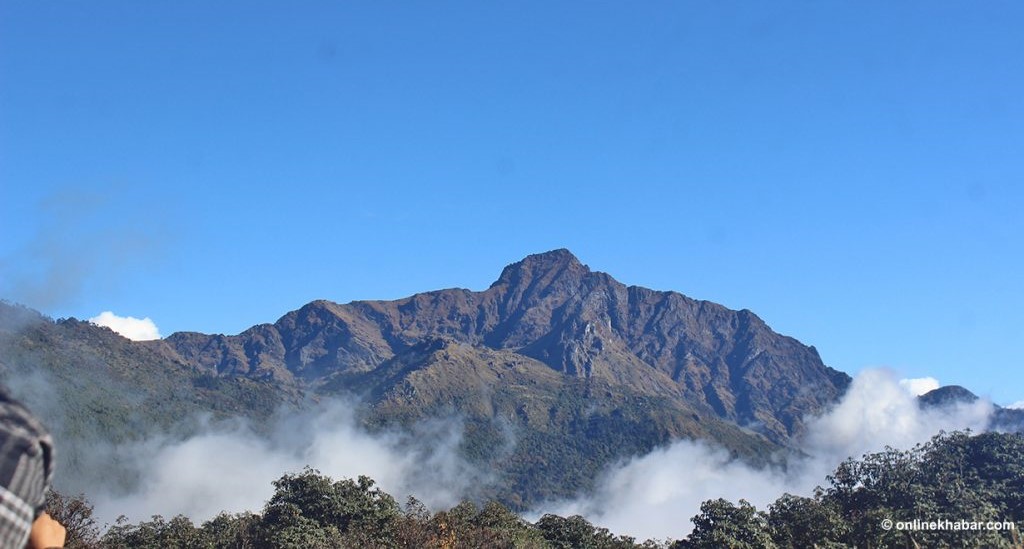
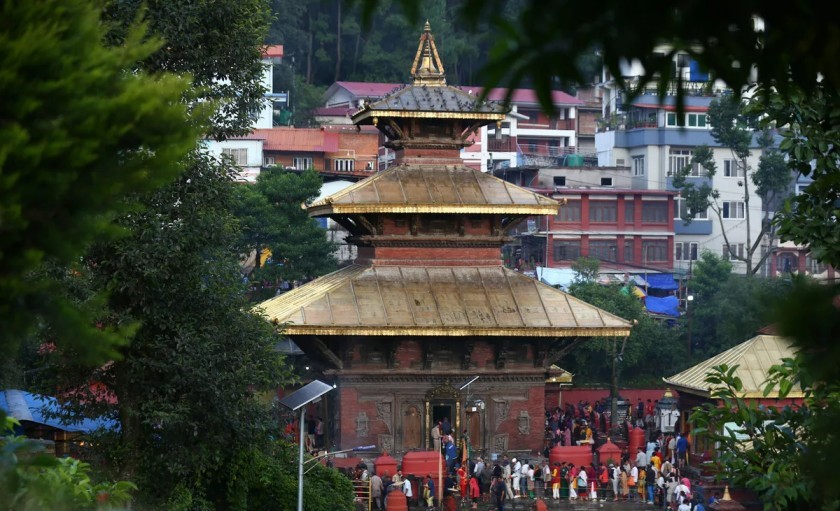

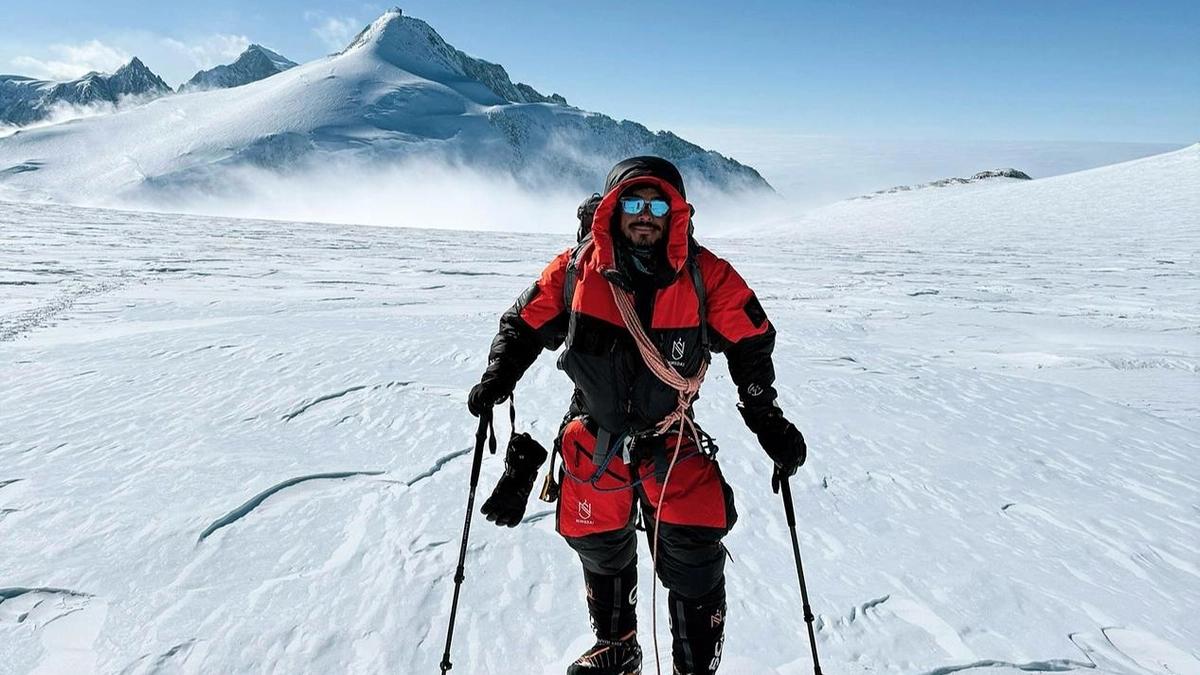

Nepal Is Rising: How Luxury, Nature and Technology Are Shaping Its Future
Quick answer: Nepal is rising on three fronts at once. Its luxury hospitality sector just earned global validation when Shinta Mani Mustang was named the world's No. 1 hotel by Robb Report's 2026 "50 Greatest Luxury Hotels on Earth" list. Its technology sector is growing fast, with IT exports roughly doubling since 2022 and a new National AI Policy in place. And its people are rebuilding after one of the deadliest climate disasters in the country's recent history, the August 2026 Langtang glacier collapse. Together, these threads describe a country whose growth is real but uneven — and worth understanding in full before treating "Nepal is rising" as a simple headline.
A Sobering Starting Point: Nepal's Climate Reality in 2026
Any honest article about Nepal's rise has to start with what actually happened this year, not skip past it for the sake of a cleaner narrative.
On August 26, 2026, a glacier collapse on the Langtang/Lirung mountain triggered a catastrophic flood that has killed more than 1,451 people, left nearly 5,800 people missing, and affected roughly 1.6 million people across five districts. The government has reported damage to dozens of bridges, thousands of homes, and a dozen hydropower projects. As of mid-September, young activists were still holding demonstrations near Mount Manaslu, calling for regular monitoring of glacial lakes along the Nepal-China border and for climate finance to be treated as a matter of justice rather than charity.
This is not background noise to a "Nepal is rising" story — it is the context the story has to be honest about. Nepal sits on some of the steepest elevation gradients on Earth, and its mountain communities are on the front line of a warming Himalaya. Any claim about resilience in Nepal in 2026 has to acknowledge that resilience is currently being tested in the most literal sense, by families searching for missing relatives and by a government assessing reconstruction costs it did not budget for.
What makes Nepal's situation distinct is that the growth story and the disaster story are unfolding at the same time, in the same country, often affecting the same regions. Mustang, home to the resort discussed below, sits in a different river valley from Langtang, but both are part of the same fragile high-altitude system. Understanding Nepal's rise means holding both realities at once: a tourism and technology sector attracting serious global attention, and a mountain nation absorbing a climate shock of historic scale.
That's also why the idea of an international climate and resilience research effort for the Himalayas covered in the next section matters beyond policy circles. It's a direct response to exactly this kind of event.
A proposed climate centre for the Himalayas
Alongside emergency response, a longer-term idea has gained traction in Nepali policy circles: an International Centre for Himalayan Studies, Climate and Resilience, based in Nepal. The proposal, discussed by commentators and researchers through 2026, is designed to complement not duplicate the work of the Kathmandu-based International Centre for Integrated Mountain Development (ICIMOD), which already has decades of regional experience in mountain research and monitoring. The idea is for the new centre to function as an open academic platform that draws universities, scientists and research programs from around the world into Nepal, shifting the country's posture from reacting to disasters like the Langtang flood toward anticipating and preparing for the next one. It remains a proposal rather than a funded institution, but it signals where serious voices think Nepal's climate strategy needs to go next.
The Robb Report Moment: Shinta Mani Mustang Puts Nepal on the Luxury Map
Quick answer: In its 2026 "50 Greatest Luxury Hotels on Earth" list, Robb Report ranked Shinta Mani Mustang as the No. 1 hotel in the world the first time a Nepali property has topped this ranking, and a milestone that hospitality analysts see as a turning point for how the country is perceived internationally.
What the ranking actually says
Robb Report's list is compiled annually by a panel of 24 "Travel Masters" luxury travel advisers who curate high-end journeys for their clients. Shinta Mani Mustang beat properties in Rwanda, Scotland, Japan, India, Italy, France and the UK to take the top spot. Robb Report's citation described the hotel as a "palace of fantasy" offering an experience for "the body, mind and spirit," and highlighted its remote setting, immersive cultural programming and design.
This is the property's fourth major recognition cycle in three years: it appeared in "Best of the Best" and the "50 Best Luxury Hotels" lists in 2024, won Best Luxury Adventure Hotel in 2025, and then took the top overall spot in 2026.
Why Shinta Mani Mustang, specifically
A few concrete details explain the win:
- Location: The 29-suite lodge sits on a hillside above Jomsom in Lower Mustang, in the Kali Gandaki Valley the deepest river gorge on Earth flanked by the Annapurna and Dhaulagiri massifs.
- Design: Designed by architect Bill Bensley using local Baglung stone and Tibetan-influenced architectural forms, the property was originally built in 2017 as a wellness lodge before Sherpa Hospitality Group partnered with the Shinta Mani brand to reopen it in August 2023.
- Experience model: The hotel operates on an all-inclusive, minimum five-night stay model built around trekking, horseback riding, archery, visits to the 800-year-old Bon Buddhist village of Lubra, and traditional healing sessions with an on-site Amchi Tibetan doctor.
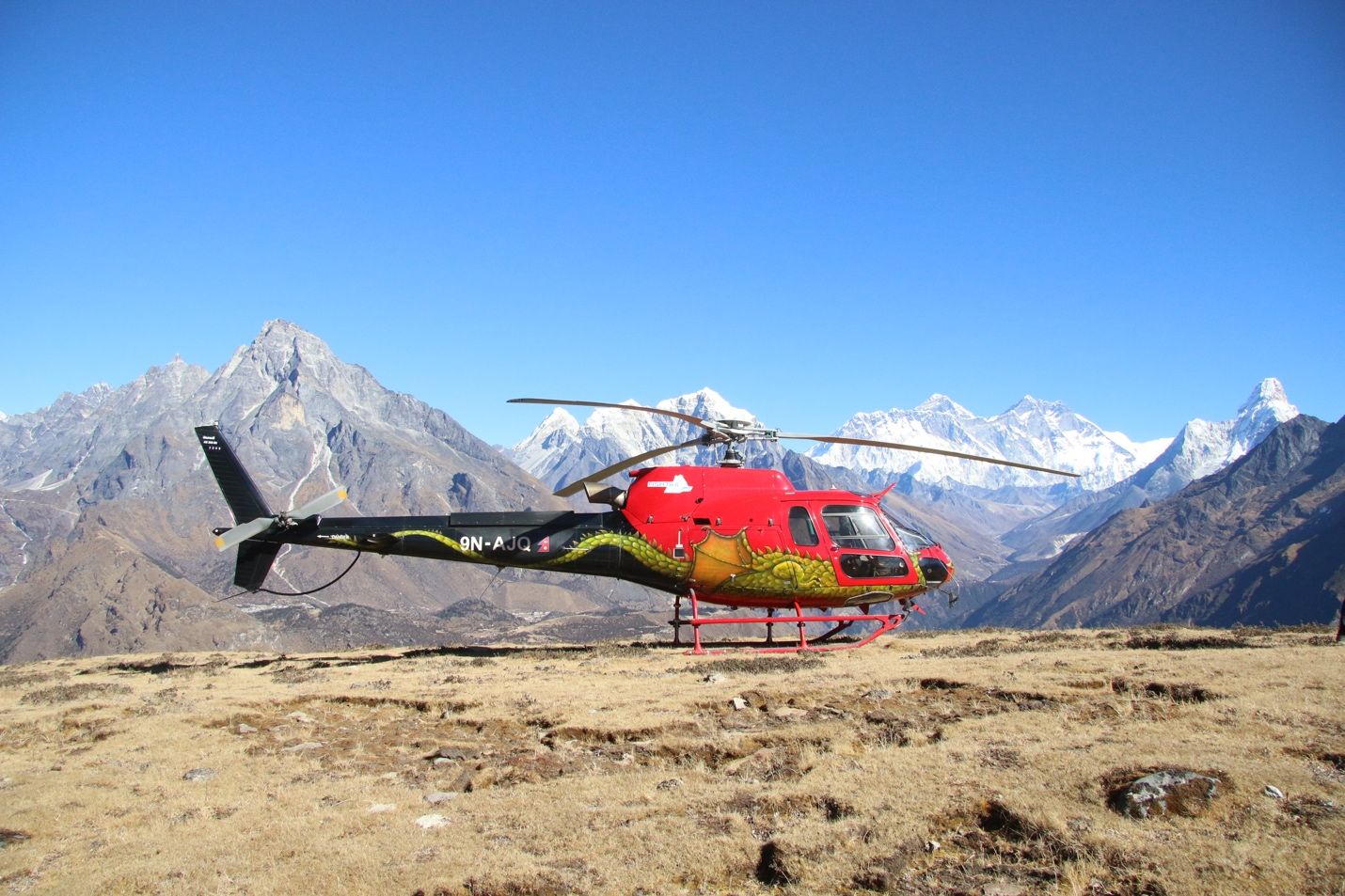
- Access: Guests typically fly from Kathmandu to Jomsom and connect by road, or take a direct helicopter transfer to the resort's own helipad a roughly 45-minute flight that bypasses weather-dependent fixed-wing connections.
Sherpa Hospitality Group's leadership has been direct about what the award represents beyond one hotel: a chance to reposition Nepal as a country known for more than trekking and mountaineering, without losing what made it distinctive in the first place.
What this means for Nepal's broader hospitality sector
One Robb Report win doesn't rewrite an entire tourism economy, but it does change the conversation luxury travel advisers are having about Nepal. Boutique, culturally immersive, high-design properties in remote settings are exactly what Robb Report's panel rewarded and that's a template other Nepali properties, particularly in Mustang, the Annapurna region and around Pokhara, are already positioned to follow.
Nature Tourism: The Numbers Behind Nepal's Recovery
Quick answer: Nepal welcomed 1,209,357 foreign tourists in fiscal year 2025/26, up from 1,158,459 in calendar year 2025 and 1,147,548 in 2024 a slow but steady climb back toward the pre-pandemic peak of 1,197,191 arrivals recorded in 2019.
Tourism recovery in Nepal has not been a straight line. Growth in 2025 was modest about 1 percent year-on-year partly because Indian arrivals fell roughly 8 percent following political unrest tied to Gen Z-led protests in September 2025. Indian visitors still represent Nepal's largest source market by a wide margin, at just over a quarter of all arrivals, followed by the United States and China.
A few patterns are worth understanding if you're evaluating Nepal as a tourism or investment destination:
- Seasonality is sharp. Arrivals peak in the October–November window (post-monsoon, clear mountain views) and again in February–April (spring trekking season).
- Source markets are diversifying slowly. Beyond India, the US and China, meaningful volumes now come from Bangladesh, the UK, Australia, Sri Lanka, Bhutan, Myanmar, Germany, Thailand, Japan and Malaysia.
- Government promotion has intensified. The Nepal Tourism Board ran more than 40 international promotional events in FY 2025/26, with a particular focus on Indian cities such as Pune, Hyderabad, Chennai, Mumbai and Delhi.
- Luxury and adventure are becoming separate product lines. Where Nepal's tourism identity used to be almost entirely defined by budget trekking, properties like Shinta Mani Mustang show a parallel, higher-margin segment forming alongside it.
For a country whose tourism sector was hit hard by the pandemic and, more recently, by both political unrest and a major climate disaster, a 97 percent recovery to pre-pandemic arrival levels is a genuinely notable data point one that context, not hype, makes more credible.
Pokhara: Nepal's nature tourism city
If Kathmandu is Nepal's administrative and cultural capital, Pokhara is fast becoming its nature tourism city. Set on the edge of Phewa Lake with the Annapurna range visible on a clear day, Pokhara serves as the launch point for the Annapurna Circuit and Annapurna Base Camp treks, and has increasingly positioned itself as a lakeside base for paragliding, wellness stays and as covered below long-stay remote work. Its dual identity as both a trekking gateway and a slower-paced lifestyle destination is a large part of why it keeps showing up alongside Mustang and Kathmandu in conversations about where Nepal's tourism product is heading next.
Nepal's Quiet Tech and AI Boom
Quick answer: Nepal's IT exports have grown from roughly $515 million in 2022 to close to $1 billion in 2026, and the country was named the world's fastest-growing startup ecosystem in 2026 by StartupBlink's Global Startup Ecosystem Index though the underlying picture is still overwhelmingly services-driven rather than venture-scale.
What's actually changed
A few developments explain why "Nepal, tech hub" is now a plausible phrase rather than a stretch:
- Policy priority. Nepal's 2026/27 national budget placed information technology and digital innovation at the center of long-term economic strategy for the first time, and responsibility for IT and digital governance was moved under the Prime Minister's Office.
- A National AI Policy. The government published a formal AI policy alongside an "IT Decade" framing for the 2030s a signal to investors and founders about where regulatory and funding priorities are headed.
- Export growth. IT exports have nearly doubled in four years, making technology one of the fastest-growing parts of the Nepali economy.
- Enterprise adoption. Independent industry research suggests a majority of large Nepali enterprises are now using or piloting AI tools in some form.
- Global-facing companies. Firms such as Fusemachines (Nasdaq-listed), CloudFactory (a major AI training-data and human-in-the-loop services company), Leapfrog and Verisk's Nepal operations have put Nepali engineering talent in front of international clients for years; a newer wave of AI-native startups is now building on that foundation.
Where the numbers need context
It's worth being precise here rather than inflating the story. Nepal has roughly 3,960 startups in total, but only about 205 have raised outside capital, totaling around $258 million all-time. That is a small venture layer sitting on top of a much larger IT-services and outsourcing industry. The "fastest-growing startup ecosystem" headline is real, but it describes a rate of change from a small base not yet a Bangalore- or Singapore-scale venture market.
The talent story is genuine, though: strong English proficiency, competitive engineering costs, and a young workforce have made Nepal an attractive base for AI training-data work, NLP research (including work on Nepali-language models), fintech, and healthtech development for global clients.
Villas, Workspaces and the Long-Stay Opportunity
Nepal does not yet have a formal digital nomad visa, but one has been drafted under the government's Economic Reform Implementing Work Plan and would offer a five-year, multiple-entry visa to applicants meeting income or savings thresholds a signal that long-stay infrastructure, from co-working spaces to serviced villas, is actively being built out in anticipation.
The current reality
As of 2026, foreign remote workers in Nepal are working around, rather than through, formal immigration channels:
- Tourist visas allow stays of 15, 30 or 90 days, capped at 150 days per calendar year with no legal path to extend specifically for remote work or freelancing.
- Longer-stay routes that exist today include Non-Tourist Visas tied to sponsored employment, family-based residency, and an Investor Residence Visa requiring a minimum investment of around $100,000.
- Banking is a genuine friction point. Opening a Nepali bank account generally requires a residency permit, so most short-term remote workers rely on cash, Wise or Revolut rather than local banking.
The proposed digital nomad visa
The draft policy, developed by the Office of the Prime Minister and Council of Ministers, would introduce:
- A one-time, five-year, multiple-entry visa
- Eligibility requiring monthly income above $1,500, or a bank balance above $20,000
- Mandatory health insurance of at least $100,000, valid at Nepali hospitals
- Residential approval for a minimum of one year at a time
- The ability to open local bank accounts, with savings above $50,000 transferable abroad at any time
Responsibility for supporting infrastructure internet connectivity, co-working spaces would sit with the Nepal Tourism Board and Nepal Telecommunications Authority, with the tourism and IT ministries acting as facilitators.
What's already on the ground
Even ahead of formal visa reform, Kathmandu and Pokhara already have a working base of long-stay infrastructure:
- Kathmandu: Work Around (Kalopul), Rem.work HQ (Kamalpokhari), Regus (Thapathali) and Hub108 offer everything from budget hot-desks to fully serviced private offices.
- Pokhara: Coworking and co-living spaces have opened around the lakeside area, catering to trekkers extending their stay into remote-work trips.
- Cost of living: A private apartment in Kathmandu or Pokhara typically runs $250–$600 a month; broader monthly budgets for remote workers cluster around $840–$930, according to nomad cost-tracking sites.
- Connectivity: Internet infrastructure has improved substantially since 2022, though it remains inconsistent enough especially during monsoon season that most sources describe Nepal as a strong partial-year base rather than a year-round one.
For villa developers, hospitality groups and property investors, this creates a specific window: infrastructure demand is visibly ahead of policy, which is often exactly the moment when early, well-located, well-managed long-stay product performs best.
Comparison: Nepal vs. Other Emerging Luxury and Remote-Work Destinations
|
Factor |
Nepal |
Bali, Indonesia |
Georgia (country) |
|
Best for |
Ultra-remote luxury lodges, high-altitude trekking, culturally immersive stays |
Beach-and-jungle remote work, wellness tourism |
Low-cost, visa-friendly digital nomad base |
|
Formal digital nomad visa |
Drafted, not yet enacted |
Yes (Second Home Visa) |
Yes (long-standing, low barrier) |
|
Cost of living (monthly) |
~$840–$930 |
~$1,000–$1,500 |
~$700–$1,000 |
|
Standout luxury credential |
Shinta Mani Mustang, Robb Report's world No. 1 hotel (2026) |
Long-established luxury villa market |
Emerging, less internationally recognized |
|
Main limitation |
Seasonal access, limited banking for foreigners, climate risk |
Overtourism in key hubs, rising costs |
Weaker natural-scenery draw for trekking-focused travelers |
This isn't a case of one destination beating the others outright it's a case of Nepal offering something genuinely distinct (extreme-altitude landscapes and cultural depth few destinations can match) while trailing on the administrative infrastructure that Bali and Georgia have already built out.
Who Should Pay Attention to Nepal Right Now
Luxury travelers and travel advisers :- Shinta Mani Mustang's win gives Nepal a credible answer to "where's next" for clients who've done the obvious ultra-luxury circuits already.
Remote workers considering a multi-month base :- Nepal works well as a five-month seasonal base under current visa rules, particularly for people who want mountains and culture rather than beaches.
Hospitality and property investors :- the gap between rising demand (tourism recovery, luxury validation, a drafted nomad visa) and existing long-stay supply is real and currently underbuilt.
Tech recruiters and outsourcing buyers :- Nepal's IT-services base is mature and cost-competitive, with a growing AI specialization in training data, NLP and vertical AI tools.
Climate and development researchers :- the scale of the August 2026 Langtang disaster, combined with proposals for a dedicated Himalayan climate and resilience research centre, makes Nepal a live case study in mountain climate adaptation.
Risks and Limitations Investors and Travelers Should Understand
No credible article on Nepal's rise should skip the downside case.
- Climate risk is not theoretical. The August 2026 glacier flood is the clearest possible illustration that infrastructure, property and lives in Himalayan Nepal face genuine, high-consequence climate exposure not a distant projection.
- Political stability has been shaky. The September 2025 unrest that reduced Indian tourist arrivals shows how quickly domestic politics can affect visitor numbers.
- Regulatory clarity is incomplete. The digital nomad visa is drafted, not law. Anyone building a business around it should treat current terms as directional, not final.
- Infrastructure gaps persist. Power reliability, internet speed and banking access for foreigners remain real constraints outside Kathmandu and Pokhara.
- The venture capital market is thin. Nepal's tech growth is currently an IT-services and outsourcing story more than a startup-equity story; the numbers support cautious optimism, not hype.
Expert Tips for Engaging with Nepal's Growth Story
Time your trip or launch around the shoulder seasons. October–November and February–April offer the clearest mountain views and the highest existing tourist infrastructure activity — useful for both travel planning and market-testing a hospitality concept.
Treat the digital nomad visa as a signal, not a guarantee. Build plans around current 150-day tourist visa rules, and treat the drafted long-stay visa as a reason to position early, not as something to depend on contractually.
Diversify beyond Kathmandu and Pokhara for property plays. Mustang's rise shows that remote, high-design properties in secondary regions can outperform capital-city hospitality on brand value, even with harder logistics.
Separate "Nepal the tech story" from "Nepal the startup story." If you're hiring or outsourcing, Nepal's IT-services maturity is the stronger asset. If you're investing venture capital, go in with base-rate expectations for a young ecosystem.
Ask direct questions about climate exposure before committing capital. For any property, resort or long-stay development in mountain districts, request specifics on glacial lake proximity, flood history and current early-warning coverage.
Common Mistakes to Avoid
Mistake: Treating one Robb Report award as proof of a mature luxury market.
Why it's a problem: A single flagship property doesn't guarantee supporting infrastructure staff training pipelines, supply chains, or a second and third comparable property exists at scale yet. What to do instead: Use Shinta Mani Mustang as evidence of potential and proof of concept, then evaluate the broader pipeline of comparable projects before assuming a sector-wide shift.
Mistake: Assuming the digital nomad visa is already in effect.
Why it's a problem: Several 2025–2026 news reports describe it as drafted policy under a broader economic reform plan, not enacted law. What to do instead: Confirm current visa status directly with a Nepali consulate or immigration lawyer before making travel or relocation commitments.
Mistake: Ignoring the climate context to keep a marketing narrative upbeat.
Why it's a problem: Given the scale of the August 2026 disaster, an unqualified "resilience" narrative can read as tone-deaf, and it also omits a material risk factor for anyone considering property or long-stay investment. What to do instead: Acknowledge the disaster directly, and treat resilience as an ongoing, unfinished process rather than a completed achievement.
Mistake: Comparing Nepal's tech sector to India's or Vietnam's on a like-for-like basis.
Why it's a problem: Nepal's IT export base, startup funding totals and talent pool are an order of magnitude smaller. What to do instead: Benchmark Nepal against similarly sized emerging tech markets, and value it for its cost-competitiveness and specialization rather than scale.
Key Takeaways
- Shinta Mani Mustang's Robb Report No. 1 ranking in 2026 is a genuine, verifiable milestone for Nepal's luxury hospitality sector, not a marketing claim.
- Nepal's tourism recovery is real but slow 1,209,357 arrivals in FY 2025/26, still just below the 2019 pre-pandemic peak of 1,197,191.
- Nepal's IT exports have nearly doubled since 2022, and a National AI Policy signals serious government intent, but the startup-funding ecosystem is still small and early-stage.
- A digital nomad visa has been drafted, not enacted; current long-stay options rely on tourist-visa limits, investor visas, or sponsored employment.
- Kathmandu and Pokhara already have functioning co-working and co-living infrastructure, ahead of formal visa policy.
- The August 2026 Langtang glacier disaster is an active humanitarian and reconstruction crisis, and any credible "Nepal is rising" narrative needs to account for it honestly.
- The strongest opportunity for investors and hospitality brands sits in the gap between demonstrated demand (Robb Report, tourism recovery, drafted nomad visa) and currently limited long-stay supply.
User-Focused FAQs
1. Is Nepal a good luxury travel destination in 2026?
Yes, with strong evidence behind it. Shinta Mani Mustang was named the world's No. 1 hotel by Robb Report's 2026 "50 Greatest Luxury Hotels on Earth" list, and the property's success is part of a broader shift toward boutique, culturally immersive luxury stays in Nepal.
2. Does Nepal have a digital nomad visa?
Not yet. A five-year, multiple-entry digital nomad visa has been drafted under Nepal's Economic Reform Implementing Work Plan, but as of 2026 it has not been formally enacted. Remote workers currently rely on standard tourist visas, capped at 150 days per year.
3. How much does it cost to live in Nepal as a remote worker?
Typical monthly budgets range from about $840 to $930, with private apartments in Kathmandu or Pokhara costing roughly $250 to $600 a month, depending on location and quality.
4. Is Nepal's tech industry actually growing, or is that overstated?
It's genuinely growing. IT exports have risen from about $515 million in 2022 to close to $1 billion in 2026, and Nepal was named the world's fastest-growing startup ecosystem in 2026 by StartupBlink. That said, the startup-funding layer remains small around 205 startups have raised outside capital, totaling roughly $258 million all-time.
5. What happened in Nepal's recent glacier disaster, and does it affect travel plans?
On August 26, 2026, a glacier collapse on Langtang/Lirung triggered a catastrophic flood that has killed more than 1,451 people and affected about 1.6 million people across five districts. It's a serious, ongoing humanitarian situation. Travelers to unaffected regions like Mustang and the Annapurna circuit are generally unaffected logistically, but should stay informed on official advisories, particularly regarding glacial lake and flood risk in northern districts.
6. Who should consider investing in Nepal's hospitality or property sector right now?
Investors comfortable with emerging-market risk and a longer time horizon are best positioned particularly those interested in boutique, remote-region luxury properties or long-stay/co-living product aimed at the still-forming digital nomad market.
7. What are the biggest risks of doing business or investing in Nepal today?
The main risks are climate exposure in mountain districts, political instability (as seen in 2025), incomplete regulatory frameworks (including the not-yet-enacted nomad visa), and infrastructure gaps in power, internet and banking access for foreigners.
Conclusion
Nepal's growth story in 2026 doesn't fit neatly into one narrative, and that's actually the more accurate way to understand it. Shinta Mani Mustang's Robb Report win puts Nepali luxury hospitality on a genuinely global stage. IT exports, a National AI Policy, and a fast-growing (if still small) startup layer point to a country building a real technology identity beyond tourism. And a drafted digital nomad visa, alongside working co-working infrastructure in Kathmandu and Pokhara, suggests the long-stay and remote-work opportunity is closer than it looks on paper.
None of that erases what happened on August 26, 2026, or the fact that thousands of families in the Langtang region are still living through the consequences. Nepal's rise, if it's happening, is happening alongside not instead of a serious climate reckoning. Understanding both sides is what separates useful analysis from a press release. If you're evaluating Nepal for travel, investment, or relocation, start with that fuller picture rather than the highlight reel.
React to this post
Related Articles